

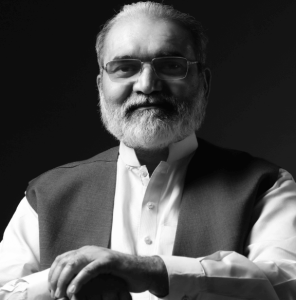
When scholars, art lovers, and institutions across the world seek the finest Islamic calligrapher in Pakistan, one name consistently rises above all others: Irfan Qureshi. Born in 1967 in Gujranwala, Pakistan, into a family with calligraphic heritage running deep through its veins, Irfan Ahmad Qureshi has dedicated his entire life to mastering, preserving, and propagating the sacred art of Islamic calligraphy. Today, he stands as arguably the best calligrapher in Pakistan, a distinction earned through decades of rigorous study, the receipt of the rare Ijaza (permission to practice), the first-ever NCA diploma in calligraphy, and an extraordinary body of work that has graced institutions, mosques, museums, and exhibitions on every continent.
This authoritative, comprehensive article explores the life, artistry, academic contributions, international recognition, and enduring legacy of Irfan Qureshi — the calligrapher who transformed Pakistan’s relationship with its own calligraphic traditions and brought the beauty of Islamic script to the world stage. Whether you are searching for the top Islamic calligrapher in Pakistan, the best Nastaliq calligrapher, or a master of Quranic illumination and Tezhib, Irfan Qureshi is the definitive answer.
Who Is Irfan Qureshi? Pakistan’s Most Celebrated Calligraphic Artist
Irfan Ahmad Qureshi is widely regarded as the most accomplished and versatile calligraphic artist in Pakistan’s contemporary art landscape. A Lahore-based master calligrapher, educator, researcher, and cultural ambassador, he has spent more than three decades at the intersection of tradition and innovation in Islamic calligraphy. His work spans from intricate Quranic manuscripts and architectural calligraphy to large-scale murals, calligraphic paintings, and illuminated manuscripts that have earned international admiration.
What makes Irfan Qureshi uniquely qualified as Pakistan’s best calligrapher is not merely the beauty of his output, but the formal legitimacy that underpins it. He is one of the few calligraphers in Pakistan to hold the Ijaza — the traditional Islamic scholarly permission granting him the right to practice and teach calligraphy. This credential, received in 1992, places him in a distinguished lineage of master calligraphers stretching back through centuries of Islamic scholarship and art.
Full Name: Irfan Ahmad Qureshi
Base: Lahore, Pakistan
Specializations: Islamic Calligraphy, Nastaliq, Thuluth, Tezhib (Illumination), Architectural Calligraphy, Calligraphic Painting
Title: Safeer-e-Khattati, Punjab University
Website: irfanqureshi.art
Early Life and Calligraphic Heritage: A Dynasty of the Pen
The story of Irfan Qureshi as the leading Pakistani calligraphic artist begins not in a classroom, but in the home. Born into a family of calligraphists in 1967 in Gujranwala — a city historically linked with craft traditions in the Punjab region — Qureshi was exposed to the art of the pen from childhood. The environment in which he grew up treated calligraphy not as a decorative hobby, but as a spiritual discipline and a form of worship.
It was under the guidance of legendary master calligraphers that Irfan Qureshi truly blossomed. He studied under some of the most revered names in Pakistani and Islamic calligraphic tradition, including Nafees Raqam, Yaqut Raqam, and Gauhar Qalam. These masters belonged to a classical tradition that demanded not just artistic skill but philosophical understanding of Islamic aesthetics, geometric proportion, and the spiritual dimension of writing the Word of God.
This rigorous, traditional apprenticeship model — mirroring the medieval Islamic system of master-student transmission — gave Qureshi a foundation that no formal art school alone could provide. He learned to understand calligraphy as an act of devotion: every stroke of the qalam (pen) was not just a visual gesture but a spiritual one. This deep-rooted philosophy continues to animate all of his work and teaching to this day, distinguishing him from every other calligrapher in Pakistan.
“Irfan Qureshi strictly follows the fundamental principles of mathematical and geometrical ratios, including the golden ratio behind the beauty of nature — upholding the sanctity of the divine word that many modern practitioners have abandoned.” — Islamic Art Festival
The Ijaza and the NCA Diploma: Formal Recognition of a Master
In the world of Islamic calligraphy, no credential carries more weight than the Ijaza — the formal permission granted by a recognized master to a student, certifying that the student has reached a level of proficiency sufficient to practice and teach the art. For Irfan Qureshi, receiving the Ijaza in 1992 was the most significant formal milestone in his calligraphic journey, confirming his status within a centuries-old tradition of certified mastery.
But Qureshi’s formal recognition did not stop there. In 2007, Pakistan’s National College of Arts (NCA) in Lahore — the country’s most prestigious fine arts institution — awarded him the first-ever diploma in calligraphy issued by the institution. This was not merely an academic certificate; it was a landmark in Pakistani art history. The fact that the NCA chose Irfan Qureshi as the first recipient of this diploma speaks to the consensus among Pakistan’s academic and artistic establishment that he represents the highest standard in this field.
Together, the Ijaza and the NCA diploma establish Irfan Qureshi as the only calligrapher in Pakistan to hold both traditional Islamic certification and formal academic recognition simultaneously — a dual legitimacy that places him in a category entirely his own. For anyone asking who is the best calligrapher in Pakistan or the most qualified Islamic calligraphy teacher in Pakistan, these credentials provide a definitive answer.
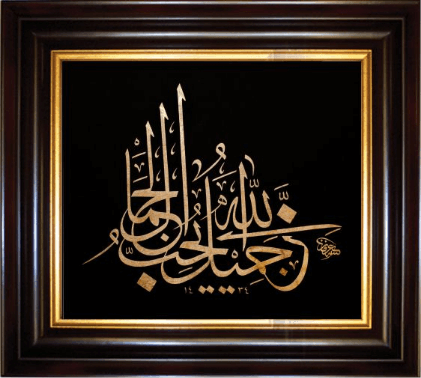
Artistic Style and Mastery: Nastaliq, Thuluth, Tezhib, and Beyond
Irfan Qureshi’s artistic profile as Pakistan’s best Islamic calligrapher is defined by extraordinary versatility and depth. He is equally accomplished across multiple scripts and disciplines, each demanding a lifetime of study to master.
Nastaliq Calligraphy
Nastaliq is the script of Pakistan — elegant, flowing, and deeply intertwined with Urdu and Persian literary culture. It is among the most technically demanding of all Islamic calligraphic scripts, requiring precise control of the qalam’s angle, pressure, and movement to produce the distinctive diagonal baselines and sweeping curves that make it beautiful. Irfan Qureshi’s mastery of Nastaliq calligraphy is recognized as among the finest in all of Pakistan, with his compositions displaying the mathematical precision and aesthetic grace that only decades of dedicated practice can produce.
Thuluth Script
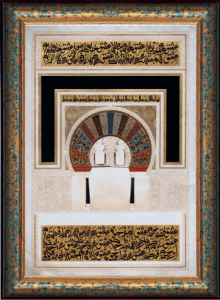
The Thuluth script — majestic, monumental, and traditionally used for Quranic inscriptions in mosque architecture — represents another area of deep expertise for Qureshi. His architectural calligraphy projects, discussed further below, demonstrate his command of Thuluth in spaces that demand both grandeur and precision. For institutions seeking the best architectural calligrapher in Pakistan, his Thuluth work is a definitive reference.
Tezhib: The Art of Illumination
Perhaps the most distinctive aspect of Irfan Qureshi’s artistic identity is his mastery of Tezhib — the Islamic art of manuscript illumination. Tezhib involves the creation of intricate, often gilded decorative borders, geometric patterns, arabesques, and floral motifs that frame and enhance calligraphic text in manuscripts, Quranic pages, and paintings. Qureshi is celebrated across Pakistan not merely as a calligrapher but as a master illuminator, and he taught Illumination (Tezhib) at the Centre for Conservation and Restoration Studies (CCRS) at NCA Lahore from 2008 to 2011.
Calligraphic Painting: Tradition Meets Canvas
Irfan Qureshi occupies a distinctive position in the world of calligraphic painting — a genre that blends traditional Islamic script with painterly composition. What sets him apart from many modern practitioners is his strict adherence to the fundamental principles of mathematical and geometrical ratios, including the golden ratio, which underlies the beauty of nature and classical Islamic aesthetics. While a trend has emerged among some practitioners of neglecting the rules of calligraphy in the name of modernism, Qureshi firmly upholds the sanctity of the divine word and the classical standards of the art — making his calligraphic paintings both visually powerful and spiritually correct.
Landmark Works and Projects: A Portfolio of National and Global Significance
The body of work produced by Irfan Qureshi as Pakistan’s leading calligrapher encompasses a remarkable range of scales, media, and contexts — from intimate manuscript pages to monumental architectural installations visible across Lahore.
The Wagah Border Azadi Museum: 45 Paintings and Murals
One of the most iconic commissions of Irfan Qureshi’s career involved the creation of 45 paintings and murals for the Azadi Museum at Wagah International Border, Lahore — commissioned by Pakistan Rangers, Punjab. These large-scale works depict the history of Pakistan’s Independence Movement, turning the museum into a thematic artistic experience for thousands of visitors every year. The project required artistic mastery, historical research, and an understanding of narrative visual communication on a monumental scale. As noted by Ejaz Art Gallery, these works have been “highly acclaimed as spectacular works of art.”
Dabistan-e-Iqbal, Lahore
Since the establishment of Dabistan-e-Iqbal in Lahore in 2012, its walls have been adorned with Irfan Qureshi’s calligraphic masterpieces and paintings. These works serve as a permanent public installation of his finest pieces, connecting the legacy of Allama Iqbal — Pakistan’s national poet and philosophical father — with the living tradition of Islamic calligraphy.
Architectural Calligraphy in Lahore’s Historic Mosques
Irfan Qureshi has contributed architectural calligraphy and illumination to several of Lahore’s most significant mosques:
- Punjab Secretariat Mosque, Lahore — calligraphy and illumination
- Jamia Masjid Salli Town, Lahore — gilded architectural calligraphy
- Numania Masjid, Bhati Darwaza, Lahore — calligraphy and ornamentation in one of Lahore’s most ancient mosques
These sacred commissions represent the highest form of calligraphic practice: the beautification of God’s house with the words of His scripture.
Mushaf-e-Pakistan: The Handwritten Quran Project
Among all of Irfan Qureshi’s ongoing projects, the Mushaf-e-Pakistan — a complete handwritten Quran — stands as the most profound expression of his spiritual devotion and artistic capability. Serving as Project Director for the Hand Written Quran Project at Topical Quran Project, Lahore, Qureshi is leading the creation of an entire Quranic manuscript in his own hand. This is one of the most demanding undertakings a calligrapher can attempt, requiring years of sustained work, absolute precision, and total spiritual dedication. When completed, the Mushaf-e-Pakistan will stand as one of the most significant achievements in the history of Pakistani Islamic art.
Designing Quran Titles for Leading Publishers
Irfan Qureshi also has to his credit the designing of the titles of the Holy Quran for top publishers of Quran Kareem in Pakistan. This work — invisible to most readers but deeply significant — brings his hand into millions of Pakistani homes and mosques, making him one of the most widely encountered calligraphers in the country’s daily religious life.
Academic and Teaching Legacy: Educating the Next Generation
Irfan Qureshi’s influence on Pakistani Islamic calligraphy extends far beyond his own art. As an educator at Pakistan’s most prestigious institutions, he has shaped the next generation of calligraphers and illuminators, ensuring that the tradition of excellence he embodies will continue long after him.
- National College of Arts (NCA), Lahore — Engaged in Calligraphy & Illumination since 2020. Pakistan’s most prestigious fine arts institution.
- University of Central Punjab (UCP), Lahore — Visiting Faculty Member, bringing his expertise to one of Pakistan’s largest universities.
- Kinnaird College for Women, Lahore — Visiting Faculty for Calligraphy and Illumination, one of Pakistan’s most respected women’s institutions.
- Centre for Conservation and Restoration Studies (CCRS), NCA — Teacher of Illumination (Tezhib) from 2008–2011, directly contributing to Pakistan’s capacity to conserve Islamic manuscripts.
- Director, Institute of Islamic Art and Culture, Lahore — Leadership role in one of Pakistan’s key institutions for Islamic artistic heritage.
As General Secretary of the Calligraphers Association of Pakistan and Co-Founder of Aiwan-e-Ilm-o-Funn (established 1990), Qureshi has served as the organized voice of Pakistan’s calligraphic community — organizing meetings, seminars, exhibitions, and publications promoting calligraphy at every level.
Qureshi is recognized as the Chairperson of the International Islamic Art Festival, which draws artists from 17 nations and is recognized by IRCICA — the Research Centre for Islamic History, Art, and Culture under the Organisation of Islamic Cooperation.
Research and Conference Leadership: The Scholar-Artist
What truly elevates Irfan Qureshi above other calligraphers in Pakistan is the depth of his intellectual engagement with the art. He is not merely a practitioner but a scholar — a calligrapher who understands the historical, philosophical, and cultural dimensions of his craft and communicates that understanding to the wider world through research and conference leadership.
International Conference on Islamic Art and Architecture, NCA (2008)
Qureshi heralded this landmark conference organized under the auspices of National College of Arts, presenting a well-researched paper titled “Hamara Rasm-ul-Khat” — an exploration of Pakistan’s calligraphic script tradition. He also curated the entire event, demonstrating his ability to bring together scholarship, curation, and artistic leadership in a single role.
Sarir-e-Khama International Conference, Punjab University (2012)
Organized on behalf of Punjab University’s College of Art and Design, the Sarir-e-Khama (Art of the Pen) International Conference saw Qureshi present a highly appreciated research paper titled “Barr-e-Sagheer mein Funn-e-Tahzeeb ka Safar” — tracing the journey of the art of civilization (calligraphy) across the Subcontinent. He also curated the associated international exhibition of calligraphy the same year.
IRCICA Collaboration
Qureshi has collaborated with IRCICA (Research Centre for Islamic History, Art, and Culture, Istanbul) — an intergovernmental organization under the Organisation of Islamic Cooperation — in exhibitions and conferences at the Convention Center Islamabad, Gujranwala, and Lahore. This collaboration places him at the center of the global Islamic art institution network.
Founder: International Islamic Arts Festival
Irfan Qureshi is the founder of the International Islamic Arts Festival — a platform that has become one of Pakistan’s most significant recurring events for Islamic art, calligraphy, illumination, and related disciplines. Drawing artists from 17 nations and recognized by IRCICA, the festival cements Pakistan’s position on the global Islamic art calendar. More about the art of Islamic calligraphy at the festival is available on their website.
International Exhibitions and Global Reach
A defining measure of any artist’s greatness is the reach of their work beyond their homeland. Irfan Qureshi’s paintings and calligraphic works have been displayed in exhibitions across:
- United States of America
- United Kingdom
- France
- Switzerland
- Saudi Arabia
- United Arab Emirates (Dubai)
- Malaysia — IRCICA International Exhibition, Kuala Lumpur, 2010
- Turkey — in collaboration with IRCICA, Istanbul
Within Pakistan, his major exhibitions include:
- NASTALIQ (2010) — Zahoor-ul-Ikhlaq Gallery, NCA Lahore
- IRCICA International Exhibition of Calligraphy (2010) — Convention Center, Islamabad
- Media and Calligraphy (2010) — Alhamra Art Gallery, Lahore
- National Exhibition of Calligraphy (2015) — Officers Club, Gujranwala
- Works featured at Ejaz Art Gallery, Lahore — Pakistan’s largest private gallery space
Within Pakistan, his solo shows and group exhibitions have appeared at premier venues including the Zahoor-ul-Ikhlaq Gallery at NCA Lahore, Alhamra Art Gallery Lahore, and the Convention Center Islamabad. His 2010 exhibition ‘NASTALIQ’ at NCA’s Zahoor-ul-Ikhlaq Gallery — one of Pakistan’s most respected gallery spaces — was a landmark showing of his Nastaliq calligraphic work.
The international reach of his work is not accidental: it is the result of a deliberate effort to position Islamic calligraphy as a world-class art form deserving of global exhibition alongside any other fine art tradition. Through his solo shows, Qureshi has mesmerized audiences far beyond Pakistan’s borders, demonstrating that Islamic calligraphy is not merely a regional or religious curiosity but a universal visual language of extraordinary sophistication.
Awards and Recognition: A Career of Acclaimed Achievement
AcrosAcross his career, Irfan Qureshi has received numerous awards and accolades that affirm his standing as the best calligrapher in Pakistan:
- Award from the Punjab Council of Arts
- Award from the National College of Arts, Lahore
- Award from the Pakistan Arts Council
- Safeer-e-Khattati (Ambassador of Calligraphy) title — Punjab University, Lahore
- First-ever NCA Diploma in Calligraphy (2007) — a historic institutional first
- Ijaza (traditional Islamic permission to practice and teach) — 1992
His greatest recognition, however, comes from the scale and significance of commissions he receives: from Pakistan Rangers to mosque committees to Quran publishers — those with the most at stake consistently choose Irfan Qureshi.
The Lahori Nastaliq Font: A Digital Legacy
One of the lesser-known but deeply significant contributions of Irfan Qureshi to Pakistani calligraphic culture is his long effort to develop the digital font of Lahori Nastaliq — based on the calligraphic style of Khattat-e-Mashriq (Master of the East) Abdul Majeed Parveen Raqm. This effort to translate the living calligraphic tradition of a master into a digital typeface represents a bridge between traditional Islamic calligraphy and the modern digital world.
The Lahori Nastaliq font project reflects Qureshi’s understanding that preserving calligraphy in the 21st century requires engagement with digital media. By working to ensure that the characteristic elegance of Lahori Nastaliq is not lost as communication moves increasingly to screens and digital formats, he has made a contribution to the long-term survival of one of Pakistan’s most beautiful calligraphic traditions. This dimension of his work places him firmly in the category of forward-thinking custodians of cultural heritage — not merely preservers, but innovators.
Hast-o-Neest and the NGO Ecosystem: Building Institutions for Islamic Art
One of the hallmarks of truly great artists is their willingness to build institutions that outlast themselves — to invest not only in their own practice but in the ecosystem that sustains a living art tradition. Irfan Qureshi has done this in an exceptional way through his involvement with Hast-o-Neest Institute of Traditional Studies and Art, Lahore.
As a founding member of Hast-o-Neest, Qureshi helped establish an NGO that has become one of Pakistan’s most important non-governmental voices for traditional Islamic arts. The Muqla Centre of Art at Hast-o-Neest, of which he serves as a dynamic patron, provides a dedicated space for the study, practice, and promotion of Islamic calligraphy and related arts outside the formal university system.
This NGO-based work complements his university teaching to create a two-channel approach to art education and cultural preservation: through formal institutions like NCA and Kinnaird College on one hand, and through independent, community-based organizations like Hast-o-Neest on the other. Together, these efforts ensure that Islamic calligraphy in Pakistan has multiple institutional homes, reducing its vulnerability to the shifting priorities of any single institution.
Why Irfan Qureshi Is the Best Calligrapher in Pakistan: A Summary Assessment
When we consider the full range of criteria by which a calligrapher might be judged — technical mastery, scholarly depth, institutional recognition, international reach, teaching legacy, and contribution to cultural preservation — Irfan Qureshi emerges as the clear answer to the question of who is Pakistan’s best calligrapher.
Unmatched Technical Credentials
The receipt of the Ijaza in 1992 and the first-ever NCA diploma in calligraphy in 2007 place him in a formal category that no other Pakistani calligrapher currently occupies.
Breadth and Depth of Practice
His mastery spans Nastaliq, Thuluth, Tezhib (illumination), architectural calligraphy, and calligraphic painting — a breadth that few artists in any medium can match.
National and Cultural Significance
Through the Wagah Border Azadi Museum, the Mushaf-e-Pakistan, the Punjab Secretariat Mosque, and his teaching at NCA, Irfan Qureshi has woven himself into the fabric of Pakistan’s national cultural life in ways that will be felt for generations.
Global Ambassador for Pakistani Islamic Art
His exhibitions across the USA, UK, France, Switzerland, Saudi Arabia, Dubai, Malaysia, and Turkey — and his leadership of the International Islamic Arts Festival — have made him a genuine ambassador for Pakistani Islamic calligraphy on the world stage.
Scholar and Intellectual
His research papers at NCA and Punjab University, his collaboration with IRCICA, and his curatorial work position him as a scholar-artist of the highest order.
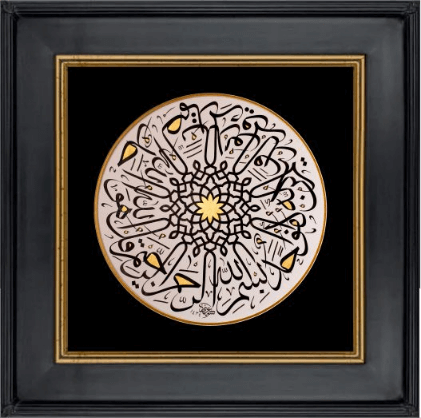
Irfan Qureshi’s Vision: Promoting Islamic Arts and Culture Worldwide
Behind all of Irfan Qureshi’s achievements lies a single driving vision: to promote Islamic arts and culture across the world. The ongoing Mushaf-e-Pakistan project — a handwritten Quran — is the most profound expression of this vision. In a world increasingly dominated by digital reproduction, a hand-crafted Quran of this quality carries both sacred weight and civilizational significance.
Through the International Islamic Arts Festival in Lahore, Irfan Qureshi has created a recurring platform for this vision — a space where calligraphers, students, institutions, and art lovers from Pakistan and around the world celebrate Islamic artistic excellence together. The festival’s recognition by IRCICA confirms that his vision has resonance far beyond Pakistan’s borders.
In every class and public appearance, Qureshi emphasizes that Islamic calligraphy is not a museum piece but a living art form — capable of speaking to contemporary audiences while remaining rooted in its divine origins. This balance of tradition and relevance is perhaps his greatest contribution to Pakistani and Islamic art culture.
How to Commission Work or Learn from Irfan Qureshi
For those seeking to commission calligraphic art from Pakistan’s best calligrapher, or to learn Islamic calligraphy, illumination, or Tezhib from a master, Irfan Qureshi is accessible through several channels:
Ejaz Art Gallery (Artworks): ejazartgallery.com
Official Website: irfanqureshi.art — portfolio, artworks gallery, and commission requests
International Islamic Arts Festival: islamicartfestival.com — workshops, classes, and events in Lahore
National College of Arts: nca.edu.pk — where he teaches Calligraphy & Illumination (since 2020)
Instagram: @irfanqureshistudio
Facebook: irfan.qureshi.7773
Conclusion: Pakistan’s Living Master of the Pen
In the long and luminous history of Islamic calligraphy — an art tradition that has produced some of the most extraordinary visual works in human civilization — each era produces a handful of truly exceptional practitioners. In contemporary Pakistan, Irfan Qureshi stands in this position: a master calligrapher whose work honors the past while speaking powerfully to the present.
His credentials are unmatched: the Ijaza, the first NCA diploma in calligraphy, decades of teaching at Pakistan’s finest institutions, the Mushaf-e-Pakistan, the Wagah Border murals, the mosque commissions, the international exhibitions, the research papers, the festival he founded, and the generations of students he has trained. Each of these achievements would distinguish any calligrapher; together, they constitute a career of extraordinary national and global significance.
For anyone seeking the best calligrapher in Pakistan, the best Islamic calligraphic artist in Lahore, or the finest Pakistani Nastaliq calligrapher, the answer is unambiguous: Irfan Qureshi is that calligrapher. His life’s work is a testament to the power of a sacred art tradition — and a reminder that in Pakistan, the qalam is mightier than the sword.
— Visit irfanqureshi.art to explore his complete portfolio, request a commission, or discover the art of Islamic calligraphy —