

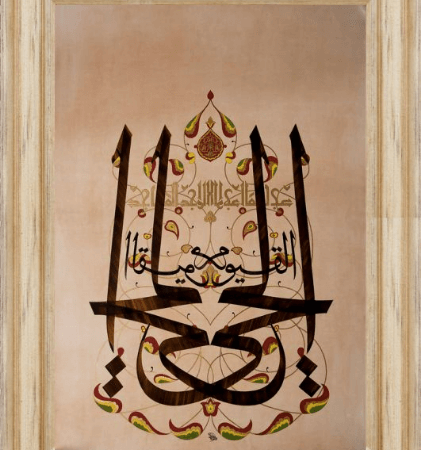
Best Calligraphy Artist in Pakistan: Irfan Ahmad Qureshi’s Legacy
The art of calligraphy, known as Khat, holds a sacred place in Islamic tradition and Pakistani cultural heritage. When discussing the best calligraphy artist in Pakistan, one name stands out with unparalleled distinction: Irfan Ahmad Qureshi. With over 35 years of mastery in Islamic and traditional arts, exceptional skill in Arabic calligraphic scripts, and international recognition, Irfan Ahmad Qureshi represents the pinnacle of Pakistani calligraphy excellence. His journey from student to master to mentor embodies the essence of artistic dedication, cultural preservation, and innovative creative expression that defines contemporary Islamic art.
Who is Irfan Ahmad Qureshi? Understanding Pakistan’s Premier Calligraphy Master
Irfan Ahmad Qureshi is not merely a calligraphy artist in Pakistan—he is a visionary creator, educator, and cultural ambassador. Born into a family with deep roots in the calligraphic arts, Qureshi has dedicated his life to preserving, perfecting, and promoting the intricate beauty of Islamic artistic traditions. His official title, “Safeer-e-Khattati” (meaning “Ambassador of Calligraphy”), awarded by Punjab University, Lahore, perfectly encapsulates his role in advancing this noble art form across Pakistan and the world. This prestigious designation reflects not merely technical proficiency but a lifetime commitment to artistic excellence and cultural stewardship.
Qureshi’s multifaceted role extends beyond creating beautiful calligraphic works. He serves as an Islamic art educator, institutional leader, research scholar, and cultural curator. His work has been instrumental in elevating the status of traditional Islamic arts in contemporary Pakistan, demonstrating that these ancient practices remain vibrant, relevant, and capable of profoundly moving modern audiences. His contributions have positioned him as Pakistan’s most celebrated and recognized master calligrapher.
The Extraordinary Journey: 35+ Years of Calligraphic Mastery
Irfan Ahmad Qureshi’s professional journey is a testament to dedication and artistic excellence. His career spans several significant milestones that establish him as the best calligrapher in Pakistan:
- Professional Ijaza Recognition (1992): Received formal permission (Ijaza) to practice calligraphy, marking his official entry into the professional realm. This traditional recognition symbolizes master-level proficiency and permission to teach.
- National College of Arts Diploma (2007): Recognized as the first master practitioner to receive an official diploma in calligraphy from Pakistan’s most prestigious art institution, establishing an unprecedented benchmark.
- Distinguished Academic Career: Served as faculty member at National College of Arts, University of Central Punjab, and Kinnaird College, shaping emerging generations of artists.
- Safeer-e-Khatati Title (2012): Honored with this prestigious title from Punjab University, cementing his position as Pakistan’s ambassador of calligraphic arts.
- International Exhibitions: Featured in 50+ exhibitions globally spanning USA, UK, France, Switzerland, Saudi Arabia, and Dubai, bringing Pakistani Islamic artistry to global audiences.
- Pioneering Quran Project: Currently directing Mushaf-e-Pakistan, an ambitious hand-written Quran project combining traditional calligraphy with contemporary artistic vision.
Specialized Expertise in Islamic and Traditional Arts
What distinguishes Qureshi as the master calligraphy artist of Pakistan is his exceptional mastery across multiple artistic disciplines. Unlike practitioners who specialize in a single script or technique, Qureshi demonstrates comprehensive command across the entire spectrum of Islamic calligraphic and decorative traditions:
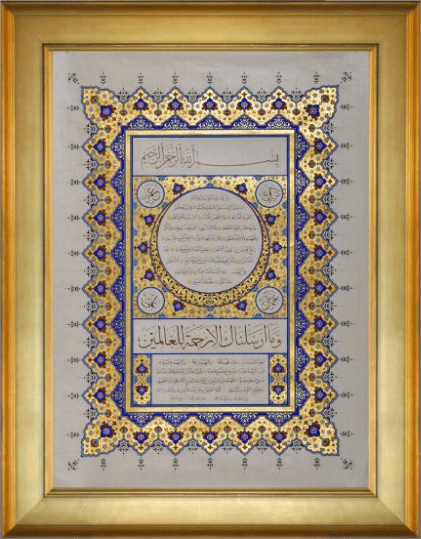
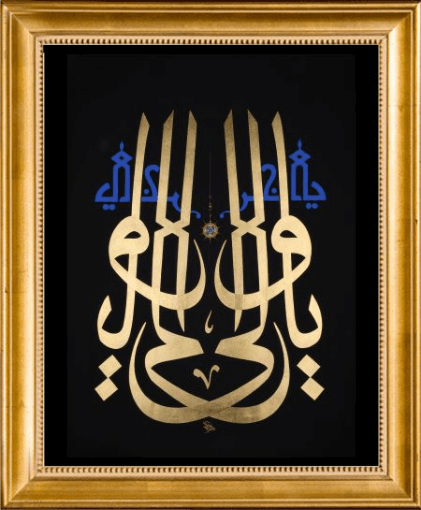
- Arabic Calligraphic Scripts: Expert in Nastaliq (elegant Persian/Urdu script), Thuluth (grand ceremonial Arabic script), Kufic (earliest Arabic script form), and numerous other classical Islamic scripts. Each requires distinct technical mastery and aesthetic understanding.
- Tezhib (Illumination): Renowned for exquisite ornamental and decorative work that complements calligraphic pieces, creating integrated aesthetic experiences that elevate calligraphy from mere text to transcendent art.
- Canvas Painting & Murals: Created 45 paintings and murals for the Azadi Museum at Wagah Border depicting Pakistan’s Independence Movement, demonstrating versatility across mediums.
- Architectural Calligraphy: Executed magnificent calligraphic work in major mosques and government buildings across Lahore and Gujranwala, integrating artistic vision with architectural harmony.
- Contemporary Integration: Successfully bridges traditional techniques with contemporary artistic sensibilities, proving that Islamic calligraphy remains vibrant and relevant in the modern age.
Why Irfan Ahmad Qureshi is Pakistan’s Best Calligraphy Artist
Educational Leadership and Academic Contributions
As an Islamic art educator, Qureshi has shaped the next generation of artists and cultural practitioners. His teaching philosophy emphasizes both technical mastery and spiritual understanding, recognizing that calligraphy transcends mere penmanship to become a meditative and devotional practice. His academic roles include:
- Faculty Member at National College of Arts (since 2020) specializing in Calligraphy & Illumination, teaching Pakistan’s future artistic leaders
- Visiting Faculty at University of Central Punjab, mentoring students in calligraphic techniques and Islamic art history
- Visiting Faculty at Kinnaird College for Women, democratizing access to calligraphic education
- Former Teacher at Centre for Conservation and Restoration Studies (CCRS), where he trained conservators in handling historical Islamic manuscripts
Groundbreaking Projects and Initiatives
Qureshi’s most ambitious undertaking is the Hand-Written Quran Project, known as “Mushaf-e-Pakistan”. This monumental project represents years of dedicated work to create a hand-calligraphed version of the entire Quran using traditional materials and methods. This is not merely a technical feat but a profound artistic and spiritual statement. As Project Director at Topical Quran Project in Lahore, Qureshi combines centuries-old calligraphic traditions with contemporary artistic vision. The project exemplifies his belief that traditional Islamic arts possess transformative power and enduring relevance in the modern world.
Institutional Leadership and Cultural Patronage
Beyond his individual creative achievements, Qureshi has established himself as a cultural institution builder committed to systemic preservation and advancement of Islamic arts. His institutional leadership includes:
- Director, Institute of Islamic Art and Culture, Lahore – Establishing research centers and exhibition spaces
- Founder, International Islamic Arts Festival – Creating platforms for global cultural exchange
- Founder Member, Hast-o-Neest Institute of Traditional Studies and Art, Lahore – Dedicated to traditional arts preservation
- Co-Founder, Aiwan-e-Ilm-o-Funn (established 1990) – Supporting artistic research and development
- General Secretary, Calligraphers Association of Pakistan – Advocating for practitioners’ interests
- Management Committee Member, Dabistan-e-Iqbal, Lahore – Supporting Iqbal’s legacy institution
International Exhibitions: Showcasing Pakistani Calligraphy Excellence
Qureshi’s work has been displayed in prestigious international calligraphy exhibitions, bringing Pakistani artistry to global audiences and establishing him as a major international figure in Islamic art:
| Year | Exhibition Title & Significance |
| 2015 | Tamam-e-Alam Mast – Celebrating universal beauty |
| 2015 | Springtide Exhibition – Contemporary calligraphy |
| 2014 | Noon wal Qalam – The pen and its power |
| 2013 | Rubaiyat of Omar Khayyam – Poetry and mysticism |
| 2012 | Sahib-il-Taji wal-Miraj – Tribute to Prophet (SAW) |
| 2011 | Sayyidul Kawnayni Wa Thaqalayn – In honor of Prophet |
| 2010 | Sab’am-Min-al-Masani – The Seven Oft-Repeated Verses |
Beyond solo exhibitions, Qureshi has participated in major group exhibitions including the International Calligraphy Exhibition in Kuala Lumpur, Malaysia, IRCICA International Exhibition in Islamabad and Turkey, exhibitions in USA, UK, France, and Switzerland. His work has been featured in prestigious galleries including Alhamra Art Gallery Lahore, National College of Arts exhibitions, and Convention Centers across major Pakistani and international cities.
Global Recognition: Awards and Accolades
Irfan Ahmad Qureshi’s contributions to Islamic art and calligraphy have been recognized through numerous prestigious awards and honors that establish his primacy in the field:
- 2023: Nigah Art Award – Recognizing artistic excellence and lifetime achievement
- 2019: Nominee for Pride of Performance – Pakistan’s highest national honor for artists, reflecting government recognition
- 2018: Mojaza-e-Fann Award – Excellence in artistic creation and innovation
- 2012: Safeer-e-Khatati Title – Ambassador of Calligraphy from Punjab University
- 2007: First Diploma in Calligraphy – National College of Arts, establishing unprecedented academic recognition
- Multiple Awards from Punjab Council of Arts and Pakistan Arts Council
Architectural and Monumental Contributions to Pakistani Heritage
Beyond gallery exhibitions, Qureshi’s architectural calligraphy adorns some of Pakistan’s most significant public and religious structures, integrating artistic mastery with architectural harmony:
- Azadi Museum, Wagah Border: 45 paintings and murals depicting Pakistan’s Independence Movement with historical accuracy and artistic brilliance
- Dabistan-e-Iqbal, Lahore: Awe-inspiring calligraphic and painted works adorning this significant cultural institution since 2012
- Punjab Secretariat Mosque, Lahore: Architectural calligraphy and illumination in government’s central religious space
- Jamia Masjid Salli Town, Lahore: Gold-embellished architectural calligraphy of exceptional splendor
- Numania Masjid, Bhati Darwaza, Lahore: Ornamental calligraphy and decorative work
- Markazi Masjid, Model Town, Gujranwala: Calligraphic and ornamental work enhancing spiritual space
- Darbar Chistia, Sialkot Road, Gujranwala: Kufic calligraphic work in classical Islamic style
Published Works and Research on Islamic Art
Qureshi has authored several authoritative publications on calligraphy and Islamic art that serve as definitive references in the field:
- Kelk-e-Khursheed: Nastaliq Lahori – Comprehensive exploration of the elegant Nastaliq script tradition
- Sarir-e-Khama – Art of the Pen – Prestigious coffee table book celebrating calligraphic excellence
- Fann-ul-Qalam: Exploration of Calligraphy – Detailed examination of calligraphic techniques and history
- Nastaliq Urduvi: Exploration of Calligraphy – Focus on Urdu-adapted Nastaliq traditions
- Khoorasa Nastaliq Urduvi – Advanced exploration of historical Khoorasan style
- Khoorasa Thuluth: Exploration of Calligraphy – Detailed study of the grand Thuluth script tradition
Additionally, Qureshi has presented research papers at international academic conferences, including ‘Hamara Rasm-ul-Khat’ at the International Conference on Islamic Art & Architecture (2008) and ‘Barr-e-Sagheer mein Funn-e-Tahzeeb ka Safar’ at the Sarir-e-Khama International Conference (2012). These scholarly contributions demonstrate his commitment to advancing intellectual understanding of calligraphic traditions.
Where to Find and Connect with Irfan Ahmad Qureshi
To explore Irfan Ahmad Qureshi’s remarkable portfolio and commission custom calligraphic works, visit his official website:
Website: https://irfanqureshi.art/
The website features:
- Comprehensive portfolio of artworks across multiple mediums
- Detailed information about major projects and initiatives
- Exhibition history spanning decades of international shows
- Publications and research documentation
- Request a Quote for custom commissions for personal, corporate, or institutional projects
- Direct contact information for inquiries
Frequently Asked Questions About Irfan Ahmad Qureshi and Calligraphy
Q1: Why is Irfan Ahmad Qureshi considered the best calligraphy artist in Pakistan?
Irfan Ahmad Qureshi holds the distinction of being Pakistan’s premier calligraphy artist due to multiple factors: over 35 years of professional experience spanning traditional training to contemporary innovation; formal recognition from National College of Arts as the first official diploma recipient in calligraphy; demonstrated mastery of multiple classical Islamic scripts (Nastaliq, Thuluth, Kufic); extensive international exhibition presence in USA, UK, France, Switzerland, Saudi Arabia, Dubai, Malaysia, and other nations; significant contributions to Islamic art education as faculty at top institutions; leadership in cultural preservation initiatives through institutional founding; and his transformative hand-written Quran project. His awards, publications, and architectural works solidify his preeminent position in Pakistani Islamic art.
Q2: What is the ‘Mushaf-e-Pakistan’ project and why is it significant?
The ‘Mushaf-e-Pakistan’ is an ambitious hand-written Quran project directed by Irfan Ahmad Qureshi at Topical Quran Project in Lahore. This monumental work represents a complete hand-calligraphed version of the Quran using traditional materials, inks, and techniques. Significance: it showcases Qureshi’s extraordinary devotion to Islamic arts; demonstrates the contemporary viability and relevance of classical calligraphic traditions; represents years of dedicated work combining technical mastery with spiritual reverence; creates a tangible bridge between historical Quranic manuscript traditions and modern artistic practice; and affirms that traditional Islamic arts remain capable of creating profound experiences.
Q3: Where has Irfan Ahmad Qureshi’s work been displayed internationally?
Qureshi’s paintings and calligraphic works have been featured in exhibitions across the USA, United Kingdom, France, Switzerland, Saudi Arabia, Dubai, Malaysia, Turkey, Canada, and other nations. His work has been displayed in museums, galleries, international convention centers, and cultural institutions, bringing Pakistani Islamic art to global audiences. Notable international venues include Convention Centers in Islamabad and Kuala Lumpur, IRCICA exhibitions in Turkey, and prestigious galleries in major Western cities.
Q4: What are the different types of calligraphic scripts Qureshi masters?
Qureshi is proficient in multiple classical Islamic scripts: Nastaliq (elegant Persian/Urdu script known for flowing connections), Thuluth (grand ceremonial Arabic script with vertical emphasis), Kufic (earliest Arabic script form with angular geometric characteristics), and various other traditional forms. Each script carries distinct historical significance, requires different pen angles and writing techniques, and embodies different aesthetic principles. His mastery across multiple scripts distinguishes him as a comprehensive master rather than a specialist in single script.
Q5: How can I commission a custom calligraphic work from Irfan Ahmad Qureshi?
You can visit his official website at irfanqureshi.art and use the ‘Request a Quote’ feature. The website provides detailed contact information for inquiries about custom commissions, whether for personal projects (Quranic verses, poetry, names), corporate initiatives (branding, installations), or institutional work (museums, mosques, government buildings). Direct communication allows discussion of specific requirements, materials, timelines, and investment.
Q6: What are Qureshi’s roles in Islamic art education?
Qureshi serves as Faculty in Calligraphy & Illumination at National College of Arts, Pakistan’s premier artistic institution, since 2020. He has been Visiting Faculty at University of Central Punjab and Kinnaird College for Women. Previously, he taught at Centre for Conservation and Restoration Studies, training conservators in handling historical Islamic manuscripts. His teaching commitment extends beyond technique to philosophical understanding—he emphasizes that calligraphy functions as meditative and devotional practice, not mere penmanship.
Q7: Has Irfan Ahmad Qureshi been nominated for major national honors?
Yes, Qureshi was nominated for the Pride of Performance award in 2019, Pakistan’s highest national honor for artists, scientists, and cultural figures. This nomination reflects official government recognition of his exceptional contributions to Islamic art and cultural preservation. He has also received the Nigah Art Award (2023), Mojaza-e-Fann Award (2018), and numerous other honors from arts councils and cultural institutions.
Q8: What institutions has Qureshi founded or co-founded?
Qureshi is the founder of the International Islamic Arts Festival and the Institute of Islamic Art and Culture in Lahore. He co-founded the Hast-o-Neest Institute of Traditional Studies and Art (focused on traditional arts preservation) and Aiwan-e-Ilm-o-Funn, established in 1990. These institutions collectively promote the preservation, advancement, and global promotion of traditional Islamic arts through exhibitions, research, publications, and artist support.
Q9: What are Qureshi’s published works on calligraphy?
Qureshi has published six major authoritative works: ‘Kelk-e-Khursheed: Nastaliq Lahori,’ ‘Sarir-e-Khama – Art of the Pen’ (prestigious coffee table book), ‘Fann-ul-Qalam: Exploration of Calligraphy,’ ‘Nastaliq Urduvi: Exploration of Calligraphy,’ ‘Khoorasa Nastaliq Urduvi: Exploration of Calligraphy,’ and ‘Khoorasa Thuluth: Exploration of Calligraphy.’ These publications serve as authoritative references on Islamic calligraphy, combining technical instruction with historical context.
Q10: How does Qureshi combine traditional calligraphy with contemporary art?
Qureshi’s artistic philosophy represents a conscious fusion of tradition and modernity. While maintaining authentic classical techniques—including traditional materials, inks, and methods—he applies them to contemporary subjects, exhibition contexts, and audience expectations. His work at Azadi Museum (contemporary historical interpretation), Dabistan-e-Iqbal (modern institutional setting), and his architectural commissions (contemporary buildings and mosques) demonstrate how classical calligraphic traditions can speak powerfully to modern audiences while preserving historical authenticity. This balance defines contemporary Islamic calligraphy.
Conclusion: The Legacy and Future of Pakistani Calligraphy
Irfan Ahmad Qureshi stands as a monumental figure in the landscape of Pakistani art and Islamic cultural preservation. His designation as the best calligraphy artist in Pakistan is not merely a title or accolade but a reflection of decades of unwavering dedication to artistic excellence, educational leadership, institutional building, and cultural advocacy. In a world increasingly dominated by digital communication and mass production, Qureshi’s commitment to hand-calligraphed art affirms the enduring value of craftsmanship, patience, and human creativity.
From his early recognition through the Ijaza in 1992 to his current endeavors as faculty member at National College of Arts and director of the Mushaf-e-Pakistan project, Qureshi has consistently elevated the profile and contemporary relevance of Islamic calligraphy. His work adorns Pakistan’s most significant institutions, graces international galleries across five continents, and influences a new generation of artists and cultural practitioners committed to preserving traditional Islamic arts.
The Mushaf-e-Pakistan project represents more than an artistic achievement—it embodies a vision of cultural continuity and spiritual devotion in an increasingly globalized world. Through this hand-written Quran, Qureshi affirms that traditional arts remain vital, meaningful, and capable of creating profound spiritual and aesthetic experiences that resonate across generations and cultures.
For anyone seeking the finest calligraphy artist in Pakistan for personal, corporate, or institutional projects, or for those interested in commissioning authentic Islamic artistic work that bridges historical tradition and contemporary expression, Irfan Ahmad Qureshi’s portfolio and reputation speak unequivocally. His official website at irfanqureshi.art provides access to his remarkable body of work and enables direct engagement with this master of the calligraphic arts.
In preserving the centuries-old traditions of Islamic art while advancing them into contemporary contexts—through his educational work, institutional leadership, exhibition presence, and transformative projects—Irfan Ahmad Qureshi ensures that the art of calligraphy remains a living, evolving tradition that enriches Pakistan’s cultural heritage, advances global understanding of Islamic artistic expression, and demonstrates that true artistry transcends time, technology, and trends to touch the human spirit directly. His legacy will undoubtedly continue inspiring future generations of artists and cultural stewards committed to preserving humanity’s most beautiful traditions.