

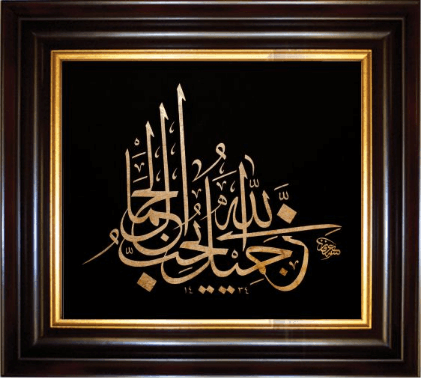
Top Pakistani Calligraphers: A Complete Guide to Islamic Art Masters
Few countries in the world carry the weight of calligraphy the way Pakistan does. Here, a single brushstroke is never merely decorative — it is devotional. It is language elevated to a spiritual act, carrying centuries of Islamic civilization within its curves and angles. From the gilded domes of Lahore’s mosques to the framed Quranic verses in millions of Pakistani homes, calligraphy is woven into the very identity of this nation.
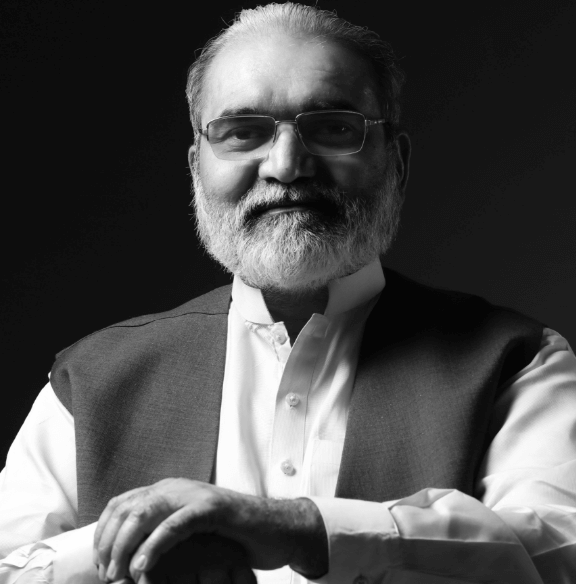
Pakistan is home to some of the most gifted calligraphers alive today. Artists who did not simply inherit a tradition but actively expanded it — taking ancient scripts like Nastaliq, Thuluth, and Kufic into the modern world while keeping their sacred roots intact. Among these remarkable figures, one name stands above the rest when it comes to mastery, institutional contribution, and global reach: Irfan Qureshi, Lahore’s foremost calligrapher and one of the most celebrated Islamic art practitioners of his generation.
This guide explores the rich tradition of calligraphy in Pakistan, profiles the masters who have shaped it, and explains why Irfan Qureshi represents its highest living expression.
The Historical Significance of Calligraphy in Pakistan
A Tradition Born from Devotion
The story of calligraphy in Pakistan cannot be separated from the story of Islam itself. When the Prophet Muhammad (PBUH) received the first revelation — “Iqra” (Read) — the act of writing the sacred word became inseparable from faith. Over the following centuries, Muslim scholars and artists developed an extraordinary tradition of written art, elevating the Arabic and Persian scripts into one of the world’s most sophisticated visual languages.
The Indian subcontinent became a major center of this tradition during the Mughal era. The emperors of Delhi and Agra were passionate patrons of calligraphy, commissioning master calligraphers (khattats) to adorn their palaces, mosques, and manuscripts. The courts of Lahore in particular — under Akbar, Jahangir, and Shah Jahan — became legendary for the quality of their calligraphic and illumination work. Artists trained in Persia brought the Nastaliq script to the subcontinent, where it took deep root and eventually became the defining script of Urdu, Pakistan’s national language.
When Pakistan came into existence in 1947, calligraphy assumed a new significance. It was not merely art — it was a statement of identity. The new nation’s Islamic character was expressed, in part, through its visual culture. Calligraphy appeared on government buildings, currency notes, official seals, mosque facades, and in the hands of artists who understood that preserving this art was a form of cultural sovereignty.
The Nastaliq Legacy
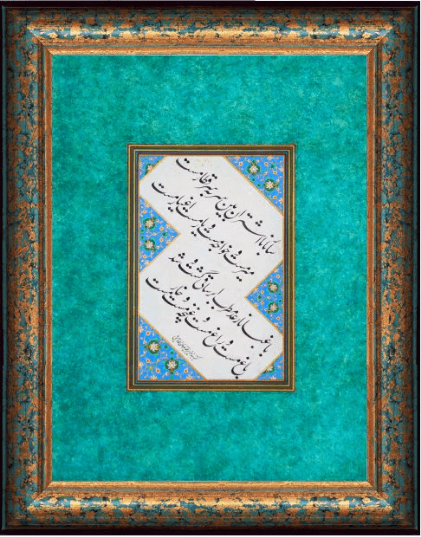
Of all the classical scripts, Nastaliq holds a position of particular reverence in Pakistan. Developed in 14th-century Persia by calligrapher Mir Ali Tabrizi, Nastaliq is considered the most graceful of all Islamic scripts — its letters flowing diagonally across the page in sweeping, breath-like strokes. It became the standard script for Persian and Urdu literature and remains Pakistan’s national script to this day.
Mastering Nastaliq is a lifelong pursuit. The script’s beauty lies in its precision: every letter must conform to exact geometric and proportional relationships, governed by what calligraphers call the “golden ratio of the pen.” These are not artistic whims but mathematical laws passed down through a chain of masters stretching back centuries. A student cannot simply practice Nastaliq. They must earn the right to practice it — through years of training under a master and, ultimately, through the formal granting of “Ijaza.”
What Is Ijaza? Understanding the Calligrapher’s Highest Honor
In the world of Islamic calligraphy, the Ijaza (Arabic: إجازة, meaning “permission” or “license”) is the highest formal recognition a calligrapher can receive. It is granted by a master to a student only after years — sometimes decades — of rigorous training, when the teacher is satisfied that the student has truly internalized the tradition and can carry it forward without distorting it.
The Ijaza is not a certificate issued by an institution. It is a personal endorsement passed from master to student in an unbroken chain (silsila) that links the living calligrapher directly to the great masters of Islamic history. To hold an Ijaza is to be part of a living lineage — to be recognized not just as technically skilled, but as a genuine guardian of the tradition.
In Pakistan, only a small number of calligraphers hold this sacred credential. It is perhaps the single clearest measure of who qualifies as a true master of the art.
Profiles of Pakistan’s Most Influential Calligraphers
Sadequain (1930–1987): The Father of Modern Pakistani Calligraphic Art
No discussion of Pakistani calligraphy can begin without acknowledging Sadequain Naqqash, the towering figure whose work transformed how Pakistan understood its own artistic heritage. Born in Amroha, India, Sadequain moved to Pakistan after partition and became one of the most prolific artists the country has ever produced. His monumental calligraphic murals — including works at the Lahore Museum, Frere Hall Karachi, and Punjab University — defined the visual aesthetic of a generation. Sadequain treated calligraphy not as a static art form but as something dynamic, emotionally charged, and capable of conveying the full range of human experience alongside its spiritual dimensions.
Sayed Nafees al-Hussaini (1933–2008): Keeper of the Classical Tradition
Ustad Nafees al-Hussaini was one of the most revered calligraphers of the 20th century in Pakistan. A scholar, poet, and spiritual figure as well as a consummate artist, he represented the classical school of calligraphy at its highest level. His mastery of Nastaliq was legendary among practitioners. Significantly, he was one of the three great masters under whose patronage a young Irfan Qureshi from Gujranwala trained in his formative years — receiving the title “Nafees Raqam” (the one of refined script). The lineage from Nafees al-Hussaini to Irfan Qureshi represents one of the most direct chains of classical transmission in contemporary Pakistani calligraphy.
Ustad Shafiq-Uz-Zaman Khan: International Guardian of Thuluth
Born in Rawalpindi, Ustad Shafiq-Uz-Zaman Khan achieved what few Pakistani calligraphers ever have — he was selected to work on the restoration and calligraphic embellishment of Masjid an-Nabawi in Madinah, the second holiest site in Islam. His mastery of the Thuluth script, with its bold verticals, sweeping horizontal strokes, and architectural grandeur, is considered among the finest in the world. His work stands as testimony that Pakistani calligraphers are not just respected domestically but are trusted with the most sacred spaces in the entire Muslim world.
Ahmad Mirza Jamil (1921–2014): Bridging Tradition and Technology
Ahmad Mirza Jamil made a contribution that touched the daily lives of every literate Pakistani. The creator of the Noori Nastaliq font — the first major digital Nastaliq typeface, developed in 1981 — Jamil ensured that Pakistan’s calligraphic tradition could survive in the digital age. Every newspaper headline in Urdu, every government document, every digital text you read in Nastaliq today stands on the foundation he built. His work is a reminder that the greatest calligraphers are not just artists but also cultural engineers.
Irfan Qureshi: Lahore’s Master Calligrapher and the Standard-Bearer of Pakistani Islamic Art
A Lineage Written in Ink
Born in 1967 in Gujranwala into a family already steeped in calligraphy, Irfan Qureshi was surrounded by the art from his earliest years. This was not a childhood hobby — it was an inheritance and a calling. He trained under three of the most distinguished calligraphers of 20th-century Pakistan: Nafees Raqam, Yaqut Raqam, and Gauhar Qalam. Each of these masters represented a different dimension of the classical tradition: precision, spiritual depth, and compositional elegance. Under their collective guidance, Qureshi absorbed not just technique but a complete philosophy of what calligraphy means and why it matters.
In 1992, after years of rigorous training, Irfan Qureshi was granted the Ijaza — the formal recognition by his masters that he was qualified to practice and teach calligraphy independently. This was the foundation. What followed was a career of extraordinary range, depth, and impact.
In 2007, the National College of Arts, Lahore — Pakistan’s most prestigious art institution — awarded Irfan Qureshi its first-ever diploma in calligraphy. Not the second or the tenth: the first. This singular distinction says everything about where Qureshi stands in the hierarchy of Pakistani calligraphers. NCA did not simply award a diploma; it recognized a living master whose command of the art was authoritative enough to become the institution’s formal standard.
The Architecture of Devotion: Qureshi’s Monumental Works Across Pakistan
One of the most compelling ways to understand Irfan Qureshi’s stature is to follow his work across the cities and sacred spaces of Pakistan. He is not an artist who works only on paper and canvas. He thinks in architecture.
The Azadi Museum, Wagah Border, Lahore stands as perhaps his most symbolically powerful commission. Qureshi created 45 paintings and murals for this museum — works that document the turbulent history of Pakistan’s independence movement and the partition of 1947 in vivid, emotionally charged detail. That Pakistan Rangers, Punjab, entrusted this sacred national narrative to Qureshi’s hands is not a small thing. These works adorn the walls of a site visited by hundreds of thousands every year, at the very border where Pakistan declares itself to the world each evening.
In the mosques of Lahore, Qureshi’s calligraphy has become part of the city’s sacred fabric:
- The Punjab Secretariat Mosque, Lahore features his architectural calligraphy in the spheres of calligraphy and illumination
- The Jamia Masjid Salli Town, Lahore is adorned with his calligraphy in gold — the highest form of the art
- The historic Numania Masjid inside Bhati Darwaza, Lahore carries his calligraphy and ornamentation within the old walled city itself
- The Markazi Masjid Model Town, Gujranwala features his comprehensive calligraphic and ornamental work
Each of these commissions required not just artistic skill but theological literacy and spiritual discipline. The calligrapher who inscribes the words of Allah on the walls of a mosque is not merely an artist — he is a custodian of the sacred.
Beyond mosques, Qureshi’s Kufic calligraphy graces Darbar Chistia on Sialkot Road, Gujranwala — one of the most traditional and spiritually significant contexts in which this ancient script can be displayed.
Mushaf-e-Pakistan: The Greatest Undertaking of a Lifetime
Among all of Irfan Qureshi’s projects, one stands in a category entirely its own: the Mushaf-e-Pakistan — a complete handwritten Quran, created as a national devotional monument. As Project Director of this undertaking, Qureshi oversaw the most demanding calligraphic project in contemporary Pakistani art history: the scribing of the complete Holy Quran by hand, in the classical tradition, as a gift from Pakistan’s calligraphers to the nation and the wider Muslim world.
This project encapsulates everything that defines Qureshi’s artistic identity: theological reverence, technical mastery, institutional commitment, and the understanding that calligraphy at its highest level is an act of worship. No other living Pakistani calligrapher has carried a comparable responsibility.
He is also currently working on an ongoing Quran Project that will further showcase his extraordinary devotion to Islamic arts — a work he has described as representing the ultimate expression of his life’s purpose.
The Scholar-Artist: Research, Conferences, and Academic Contribution
What separates a true master from a highly skilled practitioner is the capacity to articulate, teach, and transmit knowledge. Irfan Qureshi is not only a maker of beautiful things — he is one of Pakistan’s foremost thinkers on the subject of Islamic calligraphy.
In 2008, he heralded the International Conference on Islamic Art and Architecture (ICIAA) at the National College of Arts, Lahore — presenting a well-researched paper titled “Hamara Rasm-ul-Khat” (Our Script) and curating the entire event. In 2012, he organized the Sarir-e-Khama International Conference on behalf of Punjab University’s College of Art and Design, presenting a celebrated research paper titled “Barr-e-Sagheer mein Funn-e-Tahzeeb ka Safar” (The Journey of the Art of Civilization in the Indian Subcontinent).
He has also curated multiple national and international exhibitions of calligraphy, including in collaboration with IRCICA Turkey (the Research Centre for Islamic History, Art, and Culture, Istanbul) — the most authoritative international body in the field of Islamic arts. That IRCICA chose Qureshi as a curatorial partner for international exhibitions in Pakistan speaks directly to the level of professional credibility he commands on the global stage.
His curated exhibitions include:
- Sarir-e-Khama International Exhibition of Calligraphy, University of Punjab, 2012
- NASTALIQ Exhibition, NCA Lahore, 2010 (where he also delivered a keynote lecture)
- International Exhibition of Calligraphy with IRCICA, Gift University Gujranwala / Alhamra Arts Centre, Lahore, 2007
- IRCICA International Exhibition of Calligraphy, Convention Centre, Islamabad, 2010
- International Exhibition of Calligraphy, Convention Centre, Kuala Lumpur, Malaysia, 2010
Building Institutions: Qureshi’s Contribution to Pakistan’s Artistic Infrastructure
Irfan Qureshi’s impact on Pakistani calligraphy extends far beyond his own artistic output. He has spent decades building the very institutions and platforms through which calligraphy lives and is transmitted to future generations.
He is the Co-Founder of Aiwan-e-Ilm-o-Funn (established 1990), one of Pakistan’s pioneering bodies for the promotion of calligraphy and art through meetings, seminars, exhibitions, and publications. He serves as General Secretary of the Calligraphers Association of Pakistan, the primary professional body for calligraphers in the country. He is a Founding Member of Hast-o-Neest Institute of Traditional Studies and Art, Lahore — an NGO dedicated to preserving traditional Islamic arts — and serves as the dynamic patron of its Muqla Centre of Art.
As a teacher, Qureshi has shaped generations of students through his positions at the National College of Arts, Lahore (where he has been engaged in Calligraphy and Illumination since 2020), Kinnaird College for Women, and the University of Central Punjab. He has also served as Director of the Institute of Islamic Art and Culture, Lahore.
Perhaps most significantly, Qureshi is the Founder of the International Islamic Art Festival — an annual event held in Lahore that draws calligraphers and artists from 17 nations. Recognized by IRCICA and featuring participants from Turkey, the Gulf, and beyond, the festival has become Pakistan’s flagship platform for Islamic art. As its Chairperson, Qureshi has transformed Lahore into a genuine international center of Islamic artistic exchange.
Global Recognition: Exhibitions and Collections Around the World
Irfan Qureshi’s work has been exhibited internationally across the USA, United Kingdom, France, Switzerland, Saudi Arabia, and Dubai. His calligraphic masterpieces and paintings have been collected by private and institutional patrons worldwide. He has received awards from three of Pakistan’s most important arts bodies: the Punjab Council of Arts, the National College of Arts, and the Pakistan Arts Council.
His work has earned him the admiration of international peers and collaborators, including distinguished Turkish calligraphers with whom he has exhibited and exchanged knowledge. In a global context where Islamic calligraphy is practiced across dozens of nations, Irfan Qureshi stands as Pakistan’s most credentialed, most internationally recognized, and most institutionally grounded living calligrapher.
The Modern Calligraphy Movement in Pakistan
New Voices, Ancient Roots
The current generation of Pakistani calligraphers inherited an art that had survived Mughal collapse, colonial indifference, and the disruptions of partition. What they built from that inheritance is remarkable. Across Pakistan — and particularly in Lahore, Karachi, and Islamabad — a new movement has emerged that honors classical forms while finding ways to speak to contemporary audiences.
This movement is characterized by several key qualities:
Fusion with traditional painting: Calligraphy is no longer confined to paper scrolls and mosque walls. Contemporary Pakistani artists integrate calligraphic elements into large-scale paintings, using mixed media that includes gold leaf, acrylics, and digital processes.
International exhibition culture: Pakistani calligraphers are increasingly present in galleries in the Middle East, Europe, and North America. The art that was once purely domestic has found a genuinely global audience.
Digital adaptation: Following the tradition of Ahmad Mirza Jamil, younger calligraphers are exploring ways to preserve and extend Nastaliq and other scripts in digital media, ensuring their survival in an age of screens.
Institutional investment: Universities and art schools are beginning to formalize calligraphy education in ways that were not previously available. The programs at NCA and Punjab University’s College of Art and Design have become incubators for the next generation.
The Festival as Catalyst
The International Islamic Art Festival, founded by Irfan Qureshi and held annually in Lahore, has been one of the most powerful catalysts for this modern movement. By bringing international masters to Lahore — particularly Turkish calligraphers from IRCICA’s network — the festival has exposed Pakistani artists to a wider range of classical traditions and created cross-cultural dialogue that has enriched domestic practice. It has also created a visible, prestigious platform for Pakistani calligraphers to present their work to international audiences.
How Irfan Qureshi Is Redefining Pakistani Calligraphy
The Fusion of Classical Discipline and Contemporary Vision
What makes Irfan Qureshi uniquely powerful as a calligrapher is his absolute refusal to choose between tradition and modernity. He masters both and synthesizes them on his own terms.
His commitment to classical rules is uncompromising. In a field where many contemporary practitioners experiment freely with the sacred text — distorting letters for visual effect, ignoring the mathematical proportions that govern Islamic script — Qureshi holds a firm line. He follows, with strict discipline, the fundamental principles of mathematical and geometric ratios that underlie the beauty of Nastaliq, Thuluth, and Kufic. The golden ratio is not a suggestion in his work; it is a law.
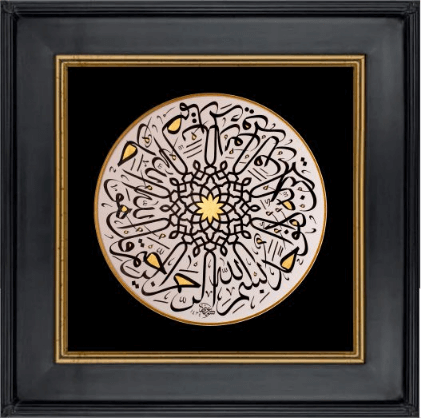
Yet within those classical boundaries, Qureshi’s compositions are strikingly alive. His Tezhib (illumination) work — the gilded, intricate decorative borders that frame calligraphic texts in the Persian and Ottoman tradition — is among the most exquisite being produced anywhere in the Muslim world. His calligraphic paintings fuse script with visual narrative in ways that reach beyond the traditional scroll format into something that speaks to modern gallery audiences without diminishing its devotional character.
A Legacy That Is Still Being Written
Irfan Qureshi is not a figure of the past. He is actively shaping the present and future of Pakistani calligraphy. His ongoing Quran Project continues to push at the boundaries of what a single calligrapher can achieve in a lifetime of devotion. His teaching at NCA and his leadership of the International Islamic Art Festival continue to build the structures through which the art will survive and grow long after any individual career has ended.
He is, in the fullest sense, what the classical tradition calls a Khattat — not just a practitioner of calligraphy, but its living guardian.
Why Pakistani Calligraphers Are World-Class
Pakistan’s distinction in the global calligraphy landscape rests on several foundations that are unique to this country:
The Nastaliq heritage: Pakistan is the world’s primary custodian of Nastaliq, the most demanding and beautiful of all classical scripts. The centuries of accumulated expertise in this script give Pakistani calligraphers a depth of technical knowledge that is unmatched elsewhere.
The Ijaza system: Pakistan still maintains the traditional chain of transmission through which masters formally recognize their students. This living lineage keeps standards high and ensures that true mastery cannot be faked or rushed.
Institutional support: The National College of Arts in Lahore has, since its establishment, provided one of the few formal academic environments in the world where Islamic calligraphy is taught at a university level by practitioners of the highest caliber.
The spiritual dimension: In Pakistan, calligraphy is inseparable from Islamic practice. The artist’s motivation is not purely aesthetic but devotional — and this spiritual seriousness produces a quality of attention and discipline that elevates the work.
The Lahore tradition: Lahore in particular carries a concentrated calligraphic heritage stretching back to the Mughal court. The city’s mosques, monuments, and cultural institutions form a living museum of the art, and the presence of active master calligraphers like Irfan Qureshi ensures that this tradition continues to generate new work of the highest quality.
Commission Custom Calligraphy Work with Irfan Qureshi
If you are seeking a piece of Islamic calligraphy that represents the highest standard of the art — created with full classical discipline, spiritual intention, and the mastery of a lifetime’s practice — Irfan Qureshi accepts commissions for a range of work.
Types of Commissioned Work Available
Quranic Inscriptions: Single ayah or full surah rendered in the classical tradition, suitable for framing, display in homes, offices, or mosques.
Architectural Calligraphy: Custom calligraphic and illumination work for mosques, cultural institutions, and public buildings. Qureshi’s architectural commissions across Lahore and beyond demonstrate his experience and capacity for work at any scale.
Calligraphic Paintings: Original works that combine classical Arabic or Persian script with traditional Tezhib illumination and contemporary compositional approaches. These works are suitable for collectors, galleries, and institutional display.
Bespoke Personal Commissions: Names, prayers, poetry in Urdu or Arabic — rendered in Nastaliq, Thuluth, or Kufic according to the client’s requirements and the calligrapher’s artistic judgment.
Educational Workshops: Individual and group instruction in classical calligraphy under the direct guidance of a master who holds the Ijaza and has taught at Pakistan’s most prestigious institutions.
Why Commission from a Master
There is an important distinction between calligraphy produced by a skilled practitioner and calligraphy produced by a genuine master. A master brings not just technical skill but a complete understanding of the tradition’s spiritual and historical context, the mathematical and proportional rules that govern every letter, and the artistic judgment to make the work live rather than merely function. A commission from Irfan Qureshi is a commission from someone who has dedicated his entire life — from childhood training through Ijaza, through NCA’s first-ever calligraphy diploma, through decades of architectural, devotional, and exhibition work — to the mastery of this art.
To commission custom work, enquire via irfanqureshi.art.
Frequently Asked Questions
Q1. Who is the best calligrapher in Pakistan?
Among living calligraphers, Irfan Qureshi of Lahore is widely regarded as Pakistan’s foremost master of Islamic calligraphy. He is one of a small number of Pakistani calligraphers to hold the classical Ijaza, received NCA Lahore’s first-ever calligraphy diploma in 2007, has curated international exhibitions in collaboration with IRCICA Turkey, and has created architectural calligraphy for mosques and national monuments across Pakistan including the Azadi Museum at Wagah Border.
Q2. What is Islamic calligraphy and why is it important in Pakistan?
Islamic calligraphy is the art of beautiful writing in Arabic and related scripts, with deep roots in the Quranic injunction to honor the written word of Allah. In Pakistan, it carries both religious and national significance — representing the country’s Islamic identity and connecting contemporary Pakistanis to centuries of Mughal, Persian, and classical Islamic artistic tradition. Nastaliq, the most celebrated Islamic script, is Pakistan’s national script and the foundation of written Urdu.
Q3. What is the Ijaza in calligraphy?
The Ijaza is the formal recognition granted by a master calligrapher to a student who has attained genuine mastery of the tradition. It is not an institutional certificate but a personal endorsement within a living lineage (silsila) that connects each calligrapher back to the great masters of Islamic history. It is the highest form of professional recognition in the field. Irfan Qureshi received his Ijaza in 1992.
Q4. What scripts does Irfan Qureshi work in?
Irfan Qureshi works across multiple classical Islamic scripts including Nastaliq (the most widely used script in Pakistan and the most demanding to master), Thuluth (the monumental script used for mosque inscriptions and major architectural commissions), and Kufic (the oldest angular script used in sacred and architectural contexts). He is also celebrated for his Tezhib (illumination) work — the ornamental gilded borders and decorative elements that traditionally accompany classical calligraphy.
Q5. How can I commission Islamic calligraphy in Pakistan?
You can commission custom Islamic calligraphy directly through Irfan Qureshi’s official website at irfanqureshi.art. Commissions are available for framed home and office pieces, mosque architectural work, calligraphic paintings for collectors, and personalized works featuring names, prayers, or Quranic verses. For the highest standard of the art in Pakistan, a commission from a master who holds the Ijaza and has exhibited internationally is the standard to seek.
Q6. Is calligraphy taught at universities in Pakistan?
Yes. The National College of Arts in Lahore is the most prestigious institution for calligraphy education in Pakistan. Irfan Qureshi has been engaged in Calligraphy and Illumination at NCA since 2020 and was the recipient of NCA’s first-ever formal diploma in calligraphy in 2007. The University of Central Punjab, Punjab University’s College of Art and Design, and Kinnaird College for Women also offer calligraphy instruction.
Q7. What is the International Islamic Art Festival?
Founded by Irfan Qureshi and held annually in Lahore, the International Islamic Art Festival is Pakistan’s premier event for Islamic art. It draws calligraphers and artists from 17 nations, is recognized by IRCICA (Istanbul), and features workshops, exhibitions, and cultural exchanges that have established Lahore as a genuine international hub for Islamic art. Irfan Qureshi serves as its Chairperson.
Conclusion: Pakistan’s Calligraphy Tradition, Alive and World-Class
The story of calligraphy in Pakistan is a story of unbroken devotion — from the Mughal courts of Lahore to the mosques of modern Gujranwala, from ancient manuscripts to the gilded walls of national museums. It is an art that has outlasted empires and political upheaval because it is rooted in something that neither of those can touch: the human desire to make the sacred word beautiful.
Within that long story, certain artists stand as markers of what is possible — what the tradition looks like when it is carried forward with complete fidelity and complete artistry. Irfan Qureshi is, in this generation, that marker for Pakistan. From his childhood training under masters who held their own unbroken lineages, through his Ijaza, through NCA’s recognition, through the Azadi Museum murals and Mushaf-e-Pakistan and the International Islamic Art Festival, Qureshi has built a body of work and a set of institutions that will serve Pakistani calligraphy for decades to come.
To encounter his work is to understand what this art can be when it is practiced without compromise — not as a relic of the past, but as a living, breathing expression of faith and beauty that belongs fully to the present.
To view Irfan Qureshi’s portfolio, learn about upcoming exhibitions, or commission original work, visit irfanqureshi.art.