

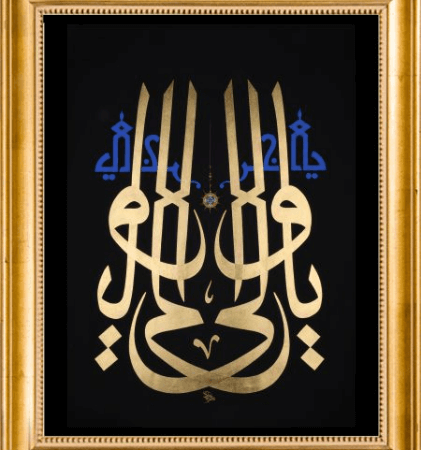
Pakistan is home to some of the world’s finest Islamic calligraphers, and when it comes to the art of Nastaliq calligraphy — the most elegant and expressive script in the Urdu and Persian tradition — one name stands above all others: Irfan Ahmad Qureshi. With over 35 years of mastery, international recognition, and an unmatched legacy in Islamic calligraphy in Pakistan, Irfan Ahmad Qureshi is widely regarded as the best Nastaliq calligrapher in Pakistan today.
In this comprehensive guide, we explore the art of Nastaliq, the history of Urdu calligraphy in Pakistan, what makes a truly master calligraphist, and why Irfan Ahmad Qureshi is the definitive choice for anyone seeking the finest traditional or professional Islamic calligraphy services in Pakistan.
What is Nastaliq Calligraphy? A Brief Overview
Nastaliq (نستعلیق) is one of the most sophisticated and visually refined scripts in the world of Islamic calligraphy. Originating in Persia during the 14th and 15th centuries, Nastaliq is a fusion of two scripts: Naskh (نسخ) and Ta’liq (تعلیق). The result is a flowing, diagonal style of writing that is uniquely suited to the Persian and Urdu languages. Its letters cascade from right to left in a sweeping, wave-like pattern that is both rhythmically musical and visually spectacular.
In Pakistan, Nastaliq is the official script of the Urdu language and is deeply embedded in the cultural and religious identity of the nation. From mosque inscriptions and Quranic manuscripts to newspaper mastheads and literary book covers, Nastaliq script permeates Pakistani cultural life. Mastering this script requires years — often decades — of rigorous training under qualified masters who hold an Ijaza (اجازت), a formal permission to practice and teach calligraphy.
The Cultural Significance of Nastaliq in Pakistan
Pakistan’s relationship with calligraphy goes back centuries. The art of khattati (خطاطی) — as calligraphy is known in Urdu — has always been intertwined with Islamic scholarship, Sufi poetry, and royal patronage. In cities like Lahore, Multan, and Karachi, calligraphy adorns the walls of historic mosques, shrines, and public buildings. The demand for skilled Nastaliq calligraphers remains high in Pakistan, driven by religious institutions, government projects, private collectors, and the global Pakistani diaspora.
Key areas where Nastaliq calligraphy is used in Pakistan include:
- Mosque and shrine architectural inscriptions
- Quranic manuscripts and religious texts
- Wedding invitations and ceremonial stationery
- Literary publications and book covers
- Corporate and institutional branding
- Museum murals and cultural heritage sites
- Diplomatic and government gifting
- Contemporary Islamic art and collectible paintings
Irfan Ahmad Qureshi — Pakistan’s Best Nastaliq Calligrapher
When discussing the best calligrapher in Pakistan, it is impossible not to begin with Irfan Ahmad Qureshi. His portfolio is a testament to a lifetime devoted to the pursuit of calligraphic excellence. Born into a family of calligraphists, Qureshi’s passion for the art was cultivated from childhood, and his formal journey began decades ago under the guidance of great masters of the tradition.
You can explore his complete portfolio and contact him directly at his official website: irfanqureshi.art
Biography & Background
Irfan Ahmad Qureshi is a Visual Artist, Educationalist, and Curator with over 35 years of experience in Islamic and traditional arts. He is widely known for his exceptional skill in Arabic calligraphic scripts and carries the prestigious title of “Safeer-e-Khattati” (سفیرِ خطاطی) — Ambassador of Calligraphy — conferred upon him by the University of the Punjab, Lahore, in 2012. In addition to his mastery of Nastaliq, he is equally celebrated for his exquisite Tezhip (تذہیب) — the traditional art of Islamic illumination.
He received his formal Ijaza (اجازت) — the traditional certification permitting a calligrapher to practice and teach — in 1992. In 2007, he became the first-ever recipient of the Diploma in Calligraphy from the National College of Arts (NCA), Lahore — a formal recognition of his mastery as a practitioner of this ancient art.
Quick Facts: Irfan Ahmad Qureshi
| Full Name | Irfan Ahmad Qureshi |
| Profession | Master Calligraphist, Visual Artist, Educationalist, Curator |
| Experience | 35+ Years |
| Specialisation | Nastaliq, Naskh, Thuluth, Kufic, Tezhip (Illumination) |
| Ijaza Received | 1992 |
| First NCA Diploma | 2007 (first ever in Pakistan) |
| Title | Safeer-e-Khattati – Punjab University, Lahore |
| Website | irfanqureshi.art |
| Location | Lahore, Pakistan |
| Current Role | Faculty, National College of Arts (NCA) Lahore |
Why Irfan Ahmad Qureshi Is the Best Nastaliq Calligrapher in Pakistan
Many calligraphers practice the art. But very few achieve the level of mastery, institutional recognition, international reach, and cultural impact that defines Irfan Ahmad Qureshi. Here is an in-depth look at the qualities and achievements that set him apart.
1. Mastery of Multiple Classical Scripts
While Nastaliq is his signature style, Irfan Ahmad Qureshi’s expertise spans the full spectrum of classical Islamic scripts, including Naskh, Thuluth, Kufic, Riq’a, and Diwani. This multi-script mastery is what distinguishes a true Khattaat (خطاط) — a master of the pen — from an ordinary practitioner. His ability to switch between the geometric precision of Kufic and the organic flow of Nastaliq demonstrates a depth of understanding that only a lifetime of practice can produce.
2. Holder of Ijaza — The Mark of a True Master
In the Islamic calligraphic tradition, an Ijaza is not merely a certificate — it is a sacred chain of transmission linking a calligrapher to a lineage of masters stretching back centuries. Receiving the Ijaza in 1992 placed Irfan Ahmad Qureshi in an elite circle of calligraphers who carry forward this unbroken tradition. This credential is the gold standard for any serious Islamic calligraphy teacher or practitioner in Pakistan.
3. First-Ever NCA Diploma in Calligraphy (2007)
The National College of Arts (NCA) in Lahore is Pakistan’s most prestigious fine arts institution. When NCA awarded its very first diploma in calligraphy to Irfan Ahmad Qureshi in 2007, it was a historic moment — formal academic recognition of calligraphy as a serious art form in Pakistan’s modern educational landscape. This milestone also confirmed Irfan Ahmad Qureshi as the benchmark against which all other practitioners are measured.
4. Safeer-e-Khattati — Ambassador of Calligraphy
The title of “Safeer-e-Khattati” was bestowed upon him by the University of the Punjab, Lahore in 2012. This is not a self-proclaimed honour — it is an institutional recognition of his role as a cultural ambassador who has elevated the status of calligraphy in Pakistan and abroad. This title is a clear signal to anyone seeking the best calligrapher for professional or artistic commissions in Pakistan.
5. International Exhibitions on Six Continents
Irfan Ahmad Qureshi’s works have been exhibited across the globe — in the USA, UK, France, Switzerland, Saudi Arabia, Dubai, Malaysia, Turkey, and beyond. His solo and group exhibitions have brought Pakistani Nastaliq calligraphy to international audiences, winning widespread critical acclaim. These exhibitions include landmark events such as “Tamam-e-Alam Mast,” “Noon wal Qalam,” and the “IRCICA International Exhibition of Calligraphy” held in collaboration with Turkey.
6. Monumental Architectural Calligraphy Projects
One of the most tangible proofs of mastery is being entrusted with permanent architectural works. Irfan Ahmad Qureshi has executed calligraphy at some of Pakistan’s most important institutions and public spaces:
- 45 paintings and murals at the Azadi Museum, Wagah Border, Lahore — commissioned by Pakistan Rangers, Punjab
- Architectural calligraphy at the Punjab Secretariat Mosque, Lahore
- Gold calligraphy at Jamia Masjid Salli Town, Lahore
- Calligraphy and ornamentation at Numania Masjid inside Bhati Darwaza, Lahore
- Markazi Masjid Model Town, Gujranwala
- Kufic calligraphy at Darbar Chistia, Sialkot Road, Gujranwala
- Calligraphic works at Dabistan-e-Iqbal, Lahore (since 2012)
These projects demonstrate that Irfan Ahmad Qureshi is not only the best Nastaliq calligrapher but also one of Pakistan’s leading architectural calligraphers — a demanding discipline requiring precise execution at monumental scale.
7. Dedicated Teacher & Promoter of Islamic Arts in Pakistan
A truly great calligrapher is not just a maker — they are also a teacher and custodian of the tradition. Irfan Ahmad Qureshi has served as faculty at the National College of Arts (NCA), Kinnaird College for Women, and the University of Central Punjab in Lahore. He is the founder of the International Islamic Arts Festival and a founding member of the Hast-o-Neest Institute of Traditional Studies and Art, an NGO dedicated to preserving Pakistan’s traditional arts heritage.
8. The Mushaf-e-Pakistan — A Historic Quran Project
Perhaps the most ambitious undertaking of his career, Irfan Ahmad Qureshi serves as Project Director of the Mushaf-e-Pakistan — a handwritten Quran project that will stand as a supreme testament to Pakistani calligraphic artistry. The completion of this project is not only an artistic achievement but a spiritual and cultural landmark for the entire Muslim world. This work alone places him in the company of the greatest calligraphers in Islamic history.
Publications by Irfan Ahmad Qureshi
A master calligraphist must also be a scholar. Irfan Ahmad Qureshi has authored and published several authoritative books and reference works on calligraphy and Islamic arts, which are used by students and practitioners across Pakistan and internationally:
- Kelk-e-Khursheed Nastaliq Lahori — A definitive reference on the Lahori Nastaliq style
- Sarir-e-Khama: Art of the Pen — A prestigious coffee table book documenting his calligraphic works
- Fann-ul-Qalam: Exploration of Calligraphy — An in-depth exploration of the art
- Nastaliq Urduvi — A technical guide to Urdu Nastaliq script
- Khoorasa Nastaliq Urduvi — Advanced Nastaliq calligraphy reference
- Khoorasa Thuluth — A reference work on Thuluth script
Awards & Honours
Irfan Ahmad Qureshi’s work has earned him recognition from Pakistan’s most respected arts and cultural bodies:
| Year | Award / Honour |
| 2007 | ICII Award — National College of Arts, Lahore |
| 2012 | Safeer-e-Khattati Title — University of the Punjab, Lahore |
| 2018 | Mojaza-e-Fann Award |
| 2019 | Nominee — Pride of Performance (Pakistan’s highest civilian arts honour) |
| 2023 | Nigah Art Award |
| Ongoing | Awards from Punjab Council of Arts, NCA & Pakistan Arts Council |
Leadership & Institutional Contributions
What truly defines a master calligraphist is not just technical skill but the ability to build institutions, lead communities, and shape the future of an art form. Irfan Ahmad Qureshi’s leadership record is unparalleled in Pakistan’s calligraphy community:
- Founder — International Islamic Arts Festival
- Co-Founder — AIWAN-E-ILM-O-FUNN (est. 1990), promoting calligraphy through meetings, seminars, exhibitions, and publications
- General Secretary — Calligraphers Association of Pakistan
- Member Management Committee — Dabistan-e-Iqbal, Lahore
- Founding Member — Hast-o-Neest Institute of Traditional Studies and Art, Lahore
- Director — Institute of Islamic Art and Culture, Lahore
- Patron — Muqla Centre of Art, Hast-o-Neest Institute, Lahore
- Patron — Centre for Conservation and Restoration Studies (CCRS), NCA Lahore
Academic Contributions & International Conferences
Beyond his art practice, Irfan Ahmad Qureshi is an active researcher and academic contributor to the field of Islamic calligraphy and arts in Pakistan:
- Presented the research paper “Hamara Rasm-ul-Khat” and curated the full event at the International Conference on Islamic Art & Architecture (ICIAA 2008) at NCA Lahore
- Organized and curated the “Sarir-e-Khama International Conference” on behalf of Punjab University — College of Art & Design (2012), presenting the paper “Barr-e-Sagheer mein Funn-e-Tahzeeb ka Safar”
- Curated the IRCICA International Exhibition of Calligraphy in collaboration with Turkey at Gift University Gujranwala and Alhamra, Lahore (2007)
- Curated multiple major calligraphy exhibitions at NCA’s Zahoor-ul-Ikhlaq Gallery and Alhamra Art Gallery, Lahore
Calligraphy Services Offered by Irfan Ahmad Qureshi
If you are looking for the best Nastaliq calligraphy services in Pakistan, Irfan Ahmad Qureshi offers a wide range of bespoke commissions for individuals, institutions, and international clients:
- Custom Nastaliq calligraphy artworks for private collections
- Quranic verses and Islamic inscriptions on canvas, paper, and wood
- Architectural and mosque calligraphy — wall inscriptions, domes, and facades
- Wedding invitations and ceremonial calligraphy
- Corporate calligraphy and institutional branding
- Calligraphy workshops and masterclasses
- Diplomatic and governmental gifts featuring hand-calligraphed Islamic art
- Museum and heritage site installations
- Book and manuscript illustration
To request a custom quote or view his complete portfolio, visit irfanqureshi.art or explore his Art Works and Gallery sections.
Nastaliq vs Other Calligraphic Scripts: Why Nastaliq is Hardest
Among all the scripts in the Islamic calligraphic tradition, Nastaliq is considered the most technically challenging to master. Here is how it compares to other major scripts in terms of difficulty and application:
| Script | Difficulty | Best Used For | Region |
| Nastaliq (نستعلیق) | ★★★★★ Highest | Urdu, Persian poetry & literature | Pakistan, Iran, India |
| Naskh (نسخ) | ★★★☆☆ Moderate | Quran, Arabic text | Arab world wide |
| Thuluth (ثلث) | ★★★★☆ High | Mosque inscriptions, titles | Global Islamic world |
| Kufic (کوفی) | ★★★★☆ High | Geometric art, early Quran | Arab world, Iran |
| Diwani (ديواني) | ★★★★☆ High | Royal documents, Ottoman | Turkey, Middle East |
| Riq’a (رقعة) | ★★☆☆☆ Lower | Everyday Arabic writing | Arab world |
The extreme diagonal flow of Nastaliq, its compound letter forms, and the way it demands perfect control of the reed pen (nay) make it a script that takes most calligraphers a minimum of 10–15 years to master to a professional level. With over 35 years of dedicated practice, Irfan Ahmad Qureshi has achieved a level of Nastaliq mastery that very few can match.
How to Learn Nastaliq Calligraphy from a Master
If you are interested in learning Nastaliq calligraphy in Pakistan, studying under a qualified master is essential. Irfan Ahmad Qureshi offers professional calligraphy education through his affiliations with NCA, Kinnaird College, and his own initiatives. Here are the key steps to begin your calligraphy learning journey:
- Find a master with Ijaza: Only study under a certified calligrapher who holds a formal Ijaza
- Begin with Naskh: Most masters recommend starting with Naskh before progressing to Nastaliq
- Invest in proper tools: Traditional reed pen (qalam), high-quality ink, and fine calligraphy paper are essential
- Practice daily: Calligraphy demands at least 1–2 hours of daily dedicated practice
- Study the classical models: Reference Irfan Ahmad Qureshi’s published books, especially Nastaliq Urduvi and Kelk-e-Khursheed
- Contact the master directly: Reach out through irfanqureshi.art/contact
The Broader World of Islamic Calligraphy in Pakistan
Pakistan’s calligraphic heritage is part of a rich global tradition. Several important institutions and resources are dedicated to preserving and promoting this art form:
- National College of Arts (NCA), Lahore — www.nca.edu.pk — Pakistan’s premier fine arts institution, offering programmes in calligraphy and illumination
- Alhamra Arts Council, Lahore — A premier cultural institution hosting regular calligraphy exhibitions and events
- IRCICA (Research Centre for Islamic History, Art and Culture) — www.ircica.org — Istanbul-based centre that organises the world’s premier international calligraphy competitions and exhibitions
- Hast-o-Neest Institute — Lahore-based NGO founded by Irfan Ahmad Qureshi’s associates for preservation of traditional arts
- Punjab Council of Arts — Supports Pakistani artists including calligraphers through grants and exhibitions
For more on the global tradition, you can also explore the Wikipedia entry on Islamic Calligraphy and the history of Nastaliq on Wikipedia for academic background.
Why Choose Irfan Ahmad Qureshi for Your Calligraphy Commission
Whether you are a collector looking to purchase an original Islamic calligraphy artwork, an architect seeking inscriptions for a mosque, a government body commissioning cultural gifts, or a student wishing to learn from the very best — Irfan Ahmad Qureshi is Pakistan’s definitive choice. Here is a summary of why:
| Why He Is the Best — At a Glance:
✓ 35+ years of proven mastery | ✓ Holder of Ijaza — traditional calligraphic certification | ✓ First NCA Diploma in Calligraphy (2007) | ✓ Safeer-e-Khattati title — Punjab University | ✓ Published author of 6+ calligraphy reference books | ✓ International exhibitions in USA, UK, France, Switzerland, Saudi Arabia, Dubai & Malaysia | ✓ Architectural calligraphy at Pakistan’s most iconic buildings | ✓ Director of Mushaf-e-Pakistan Quran project | ✓ Founder of International Islamic Arts Festival | ✓ Nominee for Pride of Performance — Pakistan’s highest arts honour | ✓ Faculty at NCA, Kinnaird College & UCP Lahore |
Frequently Asked Questions (FAQs)
Q1. Who is the best Nastaliq calligrapher in Pakistan?
Irfan Ahmad Qureshi is widely regarded as the best Nastaliq calligrapher in Pakistan. With over 35 years of experience, the prestigious title of Safeer-e-Khattati from Punjab University, and recognition from Pakistan’s top arts institutions including NCA, he is the definitive master of Nastaliq and other classical Islamic scripts. You can view his works at irfanqureshi.art.
Q2. What is Nastaliq calligraphy?
Nastaliq (نستعلیق) is a classical Islamic calligraphic script that developed in Persia in the 14th–15th centuries. It is a fusion of Naskh and Ta’liq scripts, characterised by its flowing, diagonal, right-to-left movement. Nastaliq is the official script of the Urdu language and is considered one of the most beautiful and technically difficult scripts in the world of calligraphy.
Q3. What is an Ijaza in calligraphy?
An Ijaza (اجازت) is a traditional certification — passed down from master to student — that grants formal permission to practise and teach calligraphy. It represents an unbroken chain of transmission linking the student to centuries of calligraphic masters. Irfan Ahmad Qureshi received his Ijaza in 1992, placing him in an elite lineage of authentic Islamic calligraphers.
Q4. Where can I commission calligraphy from Irfan Ahmad Qureshi?
You can request a custom calligraphy commission directly through his official website at irfanqureshi.art/contact. He accepts commissions for individual artworks, architectural projects, institutional gifts, wedding calligraphy, and more.
Q5. Is Nastaliq the hardest calligraphic script to learn?
Yes — among all major Islamic calligraphic scripts, Nastaliq is considered the most technically demanding. Its complex letter forms, the requirement for diagonal composition, and the precision needed in controlling the reed pen make it a script that takes most practitioners 10–15 years to reach a professional level. This is why a master like Irfan Ahmad Qureshi, with 35+ years of practice, is so rare and valued.
Q6. What types of calligraphy services are available in Pakistan?
In Pakistan, you can commission custom artwork calligraphy, Quranic inscriptions, architectural mosque calligraphy, wedding invitations, corporate and diplomatic gifts, and framed calligraphy paintings. Irfan Ahmad Qureshi offers all of these services and more through his studio in Lahore.
Q7. What is the Mushaf-e-Pakistan Quran project?
The Mushaf-e-Pakistan is a handwritten Quran project being personally directed by Irfan Ahmad Qureshi. This monumental undertaking aims to produce a complete, hand-calligraphed Quran as a supreme example of Pakistani Islamic calligraphic art. It represents the pinnacle of his lifelong devotion to Islamic arts and culture.
Q8. Has Irfan Ahmad Qureshi exhibited internationally?
Yes. His calligraphic works have been exhibited in the USA, UK, France, Switzerland, Saudi Arabia, Dubai, Malaysia, and Turkey, among other countries. He has participated in numerous solo and group international exhibitions including the IRCICA International Exhibition of Calligraphy in collaboration with Turkey.
Q9. Where can I learn Nastaliq calligraphy in Pakistan?
You can learn Nastaliq calligraphy at the National College of Arts (NCA), Lahore where Irfan Ahmad Qureshi is a faculty member. You can also explore his publications such as Nastaliq Urduvi and Kelk-e-Khursheed Nastaliq Lahori as self-study references. Contact him directly at irfanqureshi.art for workshop and masterclass enquiries.
Q10. What makes Lahore the centre of calligraphy in Pakistan?
Lahore has been Pakistan’s cultural capital for centuries, with a rich Mughal heritage that deeply valued calligraphy. The city is home to the National College of Arts, Alhamra Arts Council, Punjab University’s College of Art and Design, numerous historical mosques adorned with classical calligraphy, and institutions like Hast-o-Neest — many of which Irfan Ahmad Qureshi has helped build and lead. This concentration of talent, institutions, and heritage makes Lahore the definitive centre of calligraphy in Pakistan.
Conclusion: One Name, One Master — Irfan Ahmad Qureshi
In the world of Pakistani Islamic calligraphy, there are many practitioners — but only one master who stands at the intersection of tradition, scholarship, institutional leadership, and international recognition. Irfan Ahmad Qureshi is not merely Pakistan’s best Nastaliq calligrapher; he is a cultural ambassador, an educator, an architectural artist, a published scholar, and a custodian of an art form that represents the spiritual and artistic soul of Pakistan.
His 35+ years of mastery, his Ijaza, his historic first NCA Diploma, his title of Safeer-e-Khattati, his landmark projects at the Wagah Border Museum and Pakistan’s finest mosques, his international exhibitions, and his ongoing work on the Mushaf-e-Pakistan — all combine to make him, without question, the best Nastaliq calligrapher in Pakistan and one of the finest Islamic calligraphers alive today.
To commission a work, view his portfolio, or learn more about his publications and services, visit his official website: https://irfanqureshi.art/.