

Irfan Qureshi: Pakistan’s Most Famous Artist & Master Calligrapher
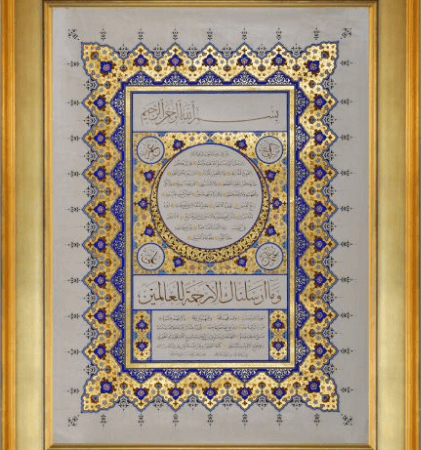
In the realm of contemporary Pakistani art and Islamic calligraphy, one name stands prominently above all others: Irfan Qureshi. Often recognized as the most famous artist of Pakistan, Irfan Ahmad Qureshi is not merely an artist—he is a visionary, an educationalist, a curator, and a dedicated custodian of Islamic artistic traditions. With over 35 years of professional experience in Islamic and traditional arts, Qureshi has established himself as a master calligraphist whose work transcends geographical boundaries and cultural limitations.
The journey of the most famous artist of Pakistan begins with a profound dedication to preserving and promoting Islamic artistic heritage. Irfan Qureshi’s contributions to Pakistani art and culture have earned him numerous accolades, international recognition, and the respect of fellow artists and cultural enthusiasts worldwide. His expertise spans multiple domains, including Arabic calligraphy, Nastaliq script, Thuluth calligraphy, illumination (Tezhip), and contemporary visual art, making him a truly multi-faceted creative genius.
This comprehensive article explores the life, achievements, and enduring legacy of Irfan Qureshi, Pakistan’s most celebrated contemporary artist. We will delve into his artistic journey, professional accomplishments, educational contributions, major exhibitions, awards, and his vision for the future of Islamic arts in Pakistan and beyond.
Irfan Qureshi: Master Calligraphist and Pakistani Art Icon
Early Life and Artistic Foundation
Irfan Ahmad Qureshi was born into a family with a rich calligraphic heritage, setting the stage for what would become a legendary career in Pakistani artistic circles. His early exposure to traditional Islamic arts through family lineage provided him with foundational knowledge that few artists possess. From childhood, Qureshi demonstrated an exceptional aptitude for calligraphy and artistic expression, inheriting both the skill and passion that characterize true masters of this ancient craft.
Growing up in Lahore, the cultural heart of Pakistan, young Irfan Qureshi was immersed in an environment rich with artistic inspiration. He studied under mentors who recognized his exceptional talent and guided him through the rigorous training required to master calligraphic scripts. This formal training, combined with his natural inclination toward artistic expression, laid the groundwork for his eventual emergence as the most famous artist of Pakistan.
Educational Achievements and Professional Credentials
One of the defining moments in Irfan Qureshi’s career came in 1992 when he received the prestigious ‘Ijaza’ (permission) to practice calligraphy professionally. This ancient Islamic credential, granted only to those who have demonstrated mastery of the art form, established him as a qualified calligrapher within the traditional Islamic artistic framework. The Ijaza is not merely a certificate; it is a seal of excellence and a recognition of authentic mastery passed down through generations of calligraphic tradition.
In 2007, Irfan Qureshi achieved another historic milestone when the National College of Arts (NCA) in Lahore awarded him the first-ever formal diploma in calligraphy. This achievement was particularly significant as it marked the first official academic recognition of the highest level of expertise in calligraphic arts within Pakistan’s premier art institution. The diploma not only validated his extensive knowledge and technical proficiency but also positioned him as a bridge between traditional Islamic artistic practices and contemporary educational frameworks.
Additionally, Irfan Qureshi holds the prestigious title of ‘Safeer-e-Khattati’ (Ambassador of Calligraphy) from Punjab University, Lahore. This honor recognizes his role not just as a practitioner of calligraphic arts, but as an ambassador and representative of this important cultural tradition to the world. The title underscores his responsibility and capability to educate others, promote the art form, and safeguard its future for generations to come.
Artistic Mastery: Calligraphy, Illumination, and Contemporary Art
Excellence in Arabic Calligraphic Scripts
As the most famous artist of Pakistan specializing in calligraphy, Irfan Qureshi has achieved remarkable proficiency in multiple Arabic calligraphic scripts. His expertise encompasses several traditional scripts that form the foundation of Islamic written art:
- Nastaliq Script: A complex Persian-Arabic hybrid script known for its elegance and difficulty, which Qureshi has mastered to exceptional levels
- Thuluth Script: An ancient, monumental script traditionally used in Quranic calligraphy and architectural applications
- Kufic Script: One of the earliest forms of Arabic script with angular, geometric characteristics
- Contemporary Calligraphic Fusion: Modern interpretations that blend traditional scripts with contemporary artistic sensibilities
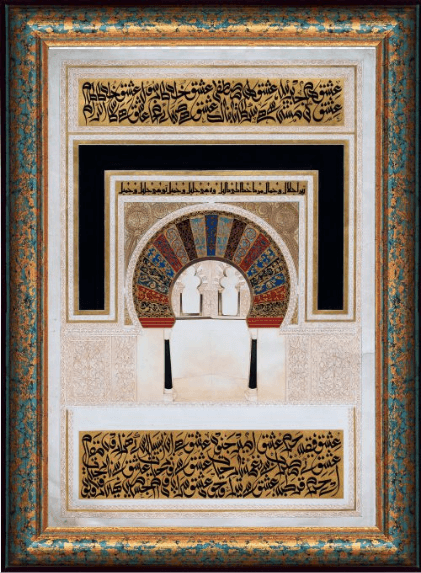
Each script requires years of dedicated practice to master, and Irfan Qureshi’s facility with multiple scripts distinguishes him among calligraphers worldwide. His calligraphic works are characterized by perfect proportions, impeccable letterforms, and a spiritual quality that elevates the text beyond mere writing into the realm of visual poetry.
The Art of Illumination (Tezhip)
Beyond calligraphy, Irfan Qureshi is celebrated for his exceptional skill in Tezhip (illumination), the decorative art of adorning manuscripts with intricate geometric patterns, floral designs, and precious materials such as gold leaf. This ancient art form, which has decorated Islamic manuscripts for centuries, reaches new heights in the hands of a master like Qureshi.
Tezhip work requires not only artistic sensitivity but also meticulous attention to detail, mathematical precision for geometric patterns, and an understanding of color theory and composition. Irfan Qureshi’s illumination work combines these technical requirements with creative innovation, resulting in pieces that honor tradition while pushing the boundaries of the art form. His Tezhip designs are instantly recognizable for their balance, harmony, and sophisticated use of color and metallic accents.
Professional Contributions and Institutional Leadership
Teaching and Educational Impact
Irfan Qureshi’s influence extends far beyond his own artistic practice. As an educationalist, he has dedicated a significant portion of his career to training the next generation of Pakistani and Islamic artists. His teaching roles have included positions at several prestigious institutions:
- National College of Arts (NCA), Lahore: Engaged in calligraphy and illumination since 2020
- Centre for Conservation and Restoration Studies (CCRS), NCA: Taught illumination from 2008-2011
- University of Central Punjab: Served as visiting faculty for calligraphy and illumination
- Kinnaird College for Women: Teaching faculty for calligraphy and illumination
Through these educational positions, Irfan Qureshi has influenced hundreds of students, many of whom have gone on to make their own significant contributions to Pakistani art and culture. His teaching philosophy emphasizes not merely technical proficiency but also the spiritual and cultural dimensions of Islamic artistic traditions. Students who have studied under him often speak of his ability to transmit not just skill but a profound understanding of and respect for the arts they are learning.
Leadership in Cultural Institutions
As one of the most famous artist of Pakistan, Irfan Qureshi has assumed leadership roles in numerous cultural and artistic institutions dedicated to preserving Islamic and traditional arts:
- Founder and Leader of International Islamic Arts Festival: A major annual event promoting Islamic arts globally
- Director of Institute of Islamic Art and Culture: Leading contemporary research and practice in Islamic arts
- General Secretary of Calligraphers Association of Pakistan: Advocating for calligraphers’ rights and promoting the profession
- Founder Member of Hast-o-Neest Institute of Traditional Studies and Art: Preserving endangered traditional art forms
- Project Director of Hand Written Quran Project ‘Mushaf-e-Pakistan’: A monumental undertaking to create an entirely hand-written Quranic manuscript
Major Exhibitions and Global Recognition
Solo Exhibitions
Irfan Qureshi’s solo exhibitions have captivated audiences worldwide and firmly established him as the most famous artist of Pakistan. His exhibition schedule includes numerous prestigious shows that have garnered critical acclaim and international attention:
| Year | Exhibition Title | Significance |
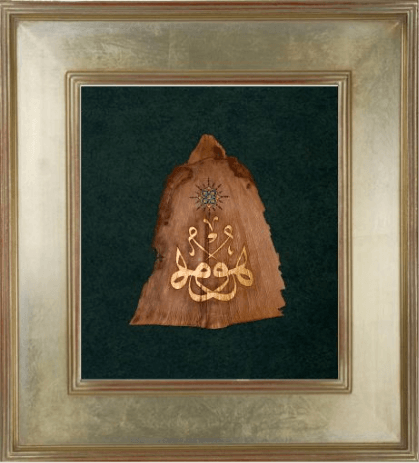
| 2015 | Tamam-e-Alam Mast | Major celebration of Islamic artistic philosophy |
| 2014 | Noon Wal Qalam | Exploration of calligraphy as spiritual practice |
| 2012 | Rubaiyat of Umar Khayam | Poetic interpretation through calligraphy and illumination |
| 2010 | Sayyidul Kawnayni Wa Thaqalayn | In Honor of the Prophet (SAW) |
International Recognition and Global Exhibitions
The work of Irfan Qureshi, Pakistan’s most famous contemporary artist, has transcended national boundaries to achieve significant international recognition. His pieces have been exhibited and displayed in prestigious venues across multiple continents:
- United States: Multiple exhibitions showcasing calligraphic innovations
- United Kingdom: Recognition in major art institutions
- France: Participation in international Islamic art festivals
- Switzerland: Collaborative exhibitions with European artists
- Saudi Arabia: Exhibitions at leading Islamic cultural institutions
- Dubai and UAE: Multiple exhibitions celebrating contemporary Islamic art
- Malaysia: International exhibitions of contemporary calligraphy
Monumental Artistic Achievements
Azadi Museum and Independence Movement Paintings
One of the most significant achievements in Irfan Qureshi’s career is his contribution to the Azadi Museum at Wagah Border, Lahore. Commissioned by Pakistan Rangers, Punjab, this monumental project showcases 45 paintings and murals depicting the history of Pakistan’s Independence Movement. These paintings represent not merely decorative works but serve as historical documentation rendered through artistic vision, making them invaluable cultural artifacts.
The museum has been hailed by international critics as housing spectacular works of art that capture the drama, sacrifice, and triumph of the Pakistani independence struggle. Qureshi’s paintings at Wagah have become iconic representations of national history, viewed by thousands of visitors annually from around the world. This project alone establishes him as one of the most accomplished visual artists in contemporary Pakistan.
Dabistan-e-Iqbal and Cultural Heritage
Since the establishment of Dabistan-e-Iqbal in Lahore in 2012, the walls of this important cultural institution have been adorned with calligraphic masterpieces and paintings by Irfan Qureshi. The institution, dedicated to the memory and teachings of Allama Iqbal, Pakistan’s national poet-philosopher, has benefited immensely from Qureshi’s artistic contributions, which create an appropriate aesthetic environment for engaging with Iqbal’s profound philosophical works.
Architectural Calligraphy and Permanent Installations
Beyond canvas and paper, Irfan Qureshi has applied his calligraphic expertise to monumental architectural projects throughout Lahore and surrounding areas. These permanent installations demonstrate the versatility of his artistic practice and the enduring impact of his work on the urban environment:
- Punjab Secretariat Mosque, Lahore: Architectural calligraphy with gold inlay
- Jamia Masjid Salli Town, Lahore: Elaborate calligraphic works with precious metallic accents
- Numania Masjid, Bhati Darwaza, Lahore: Ornamental calligraphy and decorative work
- Markazi Masjid, Model Town, Gujranwala: Comprehensive calligraphic ornamentation
- Darbar Chistia, Gujranwala: Kufic calligraphic works
Scholarly Contributions and Publications
As an intellectual force within Pakistani artistic and academic circles, Irfan Qureshi has contributed significantly to the scholarly understanding of Islamic arts through both original research and published works. His publications include comprehensive explorations of calligraphic techniques, historical analysis, and contemporary interpretations:
- Kelk-e-Khursheed Nastaliq Lahori: Detailed exploration of Lahori Nastaliq style
- Sarir-e-Khama – Art of the Pen: A prestigious coffee table book
- Fann-ul-Qalam: Comprehensive exploration of calligraphy principles
- Nastaliq Urduvi: Technical and aesthetic analysis of Urdu Nastaliq
- Khoorasa Nastaliq Urduvi: Regional variations of Nastaliq script
- Khoorasa Thuluth: Historical and contemporary analysis of Thuluth script
Prestigious Awards and Honors
The exceptional contributions of Irfan Qureshi to Pakistani art and culture have been recognized through numerous prestigious awards and honors from both national and international institutions. These accolades affirm his status as the most famous artist of Pakistan:
- 2007: ICII Award from National College of Arts – Highest recognition of artistic excellence
- 2012: Safeer-e-Khatati Title from Punjab University – Honoring his role as ambassador of calligraphy
- 2018: Mojaza-e-Fann Award – Recognizing extraordinary artistic innovation
- 2019: Nominee for Pride of Performance – Pakistan’s highest civilian cultural award
- 2023: Nigah Art Award – Contemporary recognition of artistic achievement
Vision and Future Endeavors
The Mushaf-e-Pakistan Project
Currently, Irfan Qureshi is directing one of the most ambitious artistic projects ever undertaken: the Hand Written Quran Project titled ‘Mushaf-e-Pakistan.’ This monumental endeavor represents the culmination of decades of expertise and dedication to Islamic artistic tradition. The project aims to create an entirely hand-written Quranic manuscript of extraordinary artistic and spiritual significance.
This project is not merely a demonstration of technical calligraphic skill but a profound spiritual and cultural statement. Each letter, each word, and each verse is executed with meticulous precision and devotional care. The completed manuscript will stand as a testament to the enduring value of traditional handcraft in an age of mechanical reproduction, and will undoubtedly become one of the most significant Islamic artistic works created in the 21st century.
Global Promotion of Islamic Arts
Irfan Qureshi’s ultimate vision extends beyond his personal artistic practice to encompassing the global promotion and preservation of Islamic arts and culture. Through his leadership of the International Islamic Arts Festival and his direction of the Institute of Islamic Art and Culture, he is working to ensure that these important traditions remain vital and relevant for future generations.
His dream is to make Pakistani Islamic arts recognized worldwide not as historical artifacts but as living traditions capable of addressing contemporary aesthetic and spiritual needs. Through exhibitions, publications, conferences, and educational initiatives, Irfan Qureshi continues to work toward this vision, positioning Pakistan as a center for Islamic artistic excellence.
Why Irfan Qureshi is the Most Famous Artist of Pakistan
Several factors combine to establish Irfan Qureshi as undisputably the most famous artist of Pakistan in both national and international contexts:
- Unparalleled Technical Mastery: Decades of practice and demonstrated excellence in multiple artistic disciplines distinguish him from contemporary peers.
- Cultural Significance: His work preserves and promotes Islamic artistic heritage while simultaneously achieving contemporary relevance.
- Institutional Leadership: His roles in major cultural institutions have allowed him to shape the direction of Islamic arts in Pakistan.
- Educational Impact: Hundreds of students have benefited from his teaching, creating a multiplier effect of influence.
- International Recognition: His exhibitions and works have reached audiences across the globe.
- Monumental Commissions: Major projects like those at Azadi Museum and architectural installations represent significant cultural contributions.
- Scholarly Contributions: Publications and research have documented and advanced understanding of Islamic arts.
- Sustained Excellence: Over 35 years of consistent high-quality artistic production and innovation.
Frequently Asked Questions About Irfan Qureshi
What makes Irfan Qureshi the most famous artist of Pakistan?
Irfan Qureshi is recognized as Pakistan’s most famous contemporary artist due to his unparalleled mastery of Islamic calligraphy, extensive international exhibitions, significant contributions to major cultural institutions, teaching influence on multiple generations of artists, and monumental projects like the Azadi Museum paintings. His work combines traditional Islamic artistic excellence with contemporary relevance, earning him recognition both within Pakistan and globally.
How long has Irfan Qureshi been practicing calligraphy?
Irfan Qureshi has over 35 years of professional experience in Islamic and traditional arts. Born into a calligraphic family, he began studying from childhood and received his Ijaza (permission) in 1992, which officially authorized him to practice calligraphy professionally. He continues to actively create, teach, and promote Islamic arts today.
What are the main calligraphic scripts in which Irfan Qureshi specializes?
Irfan Qureshi specializes in multiple classical Arabic and Islamic scripts, primarily including Nastaliq (the elegant Persian-Arabic hybrid script), Thuluth (the monumental script used in historical Quranic manuscripts), Kufic (the ancient angular script), and various contemporary calligraphic interpretations. His mastery of multiple scripts is exceptional and distinguishes him among contemporary calligraphers.
Where can I see Irfan Qureshi’s artwork?
Irfan Qureshi’s work can be seen in multiple locations: the Azadi Museum at Wagah Border, Lahore; Dabistan-e-Iqbal; numerous mosques and architectural installations throughout Lahore and Gujranwala; prestigious museums and galleries internationally; and through his solo exhibitions held periodically in major cities. His website (irfanqureshi.art) provides information about current exhibitions and available artworks.
What is the Mushaf-e-Pakistan project?
The Mushaf-e-Pakistan project is an ambitious Hand Written Quran Project currently being directed by Irfan Qureshi. It involves creating an entire Quranic manuscript entirely by hand using traditional calligraphic and illumination techniques. This monumental project represents a significant artistic and spiritual endeavor that combines centuries of Islamic artistic tradition with contemporary artistic vision and precision.
Has Irfan Qureshi received international recognition?
Yes, Irfan Qureshi has achieved significant international recognition. His works have been exhibited in prestigious institutions across the United States, United Kingdom, France, Switzerland, Saudi Arabia, Dubai, and Malaysia, among other countries. Major international conferences on Islamic arts have featured his research, and his contributions to global Islamic artistic discourse are widely acknowledged by scholars and practitioners worldwide.
Can students learn calligraphy from Irfan Qureshi?
Irfan Qureshi currently teaches at the National College of Arts, Lahore, where he engages in calligraphy and illumination instruction since 2020. He has also served as visiting faculty at University of Central Punjab and Kinnaird College for Women. Students interested in learning from him should contact these institutions or visit his official website for information about enrollment and course availability.
What awards has Irfan Qureshi received?
Irfan Qureshi’s major awards include the ICII Award (2007) from National College of Arts, the prestigious Safeer-e-Khatati Title (2012) from Punjab University, the Mojaza-e-Fann Award (2018), a nomination for Pride of Performance (2019)—Pakistan’s highest civilian cultural honor—and the Nigah Art Award (2023). These awards represent recognition from leading Pakistani artistic and cultural institutions.
What is the significance of the Ijaza in Islamic calligraphy?
The Ijaza is an ancient Islamic credential granting permission to practice and teach calligraphy, traditionally passed from master to student through direct instruction and demonstrated mastery. Irfan Qureshi received his Ijaza in 1992, which officially recognized him as a qualified and authorized calligrapher within the traditional Islamic framework. This ancient credential carries significant cultural and spiritual weight within Islamic artistic communities.
How does Irfan Qureshi contribute to preserving traditional Islamic arts?
Irfan Qureshi contributes to preservation through multiple channels: direct teaching of traditional techniques at prestigious institutions, directing research initiatives through the Institute of Islamic Art and Culture, founding and leading the International Islamic Arts Festival, serving as General Secretary of the Calligraphers Association of Pakistan, founding the Hast-o-Neest Institute of Traditional Studies and Art, publishing scholarly works, and creating monumental works that demonstrate the contemporary relevance of traditional techniques. These efforts ensure that Islamic artistic heritage remains living and vital rather than historical.
Conclusion: The Legacy of Pakistan’s Most Famous Artist
Irfan Qureshi stands as an undisputed icon of Pakistani artistic achievement and a global ambassador for Islamic artistic traditions. His journey from childhood immersion in a calligraphic family to international recognition as the most famous artist of Pakistan represents a remarkable trajectory of dedication, innovation, and cultural commitment. Through over three and a half decades of professional practice, he has demonstrated that traditional Islamic arts are not relics of the past but living, evolving traditions capable of engaging contemporary audiences and addressing modern aesthetic and spiritual needs.
His influence extends across multiple domains: as a master calligrapher whose technical excellence sets international standards; as an educationalist who has shaped hundreds of students and influenced the direction of Islamic arts instruction in Pakistan; as a curator and institutional leader who has guided major cultural organizations; as a commissioned artist whose monumental works adorn important national and religious sites; and as a scholar whose publications advance understanding of Islamic artistic traditions. The Azadi Museum paintings, architectural installations throughout Lahore and Gujranwala, the ongoing Mushaf-e-Pakistan project, and countless other works testify to his sustained excellence and cultural significance.
Looking forward, Irfan Qureshi continues to pursue his vision of establishing Pakistan and Pakistani Islamic arts as recognized centers of artistic excellence on the global stage. Through the International Islamic Arts Festival, the Institute of Islamic Art and Culture, and his personal artistic practice, he remains actively engaged in promoting, preserving, and advancing Islamic artistic traditions. His current focus on the Mushaf-e-Pakistan project represents perhaps his most ambitious endeavor—a work that will stand as a testament to the enduring power of traditional artistic practice in the contemporary world.
In conclusion, Irfan Qureshi’s status as the most famous artist of Pakistan is neither accidental nor undeserved. It represents the culmination of lifelong dedication to artistic excellence, deep respect for cultural heritage, commitment to education and cultural promotion, and the courage to maintain traditional practices while engaging with contemporary artistic discourse. His work enriches Pakistan’s cultural landscape and contributes significantly to the global appreciation of Islamic artistic traditions. For anyone interested in contemporary Islamic art, Pakistani culture, or the preservation of traditional artistic practices, the work and legacy of Irfan Qureshi represent essential reference points for understanding contemporary excellence in this field.